

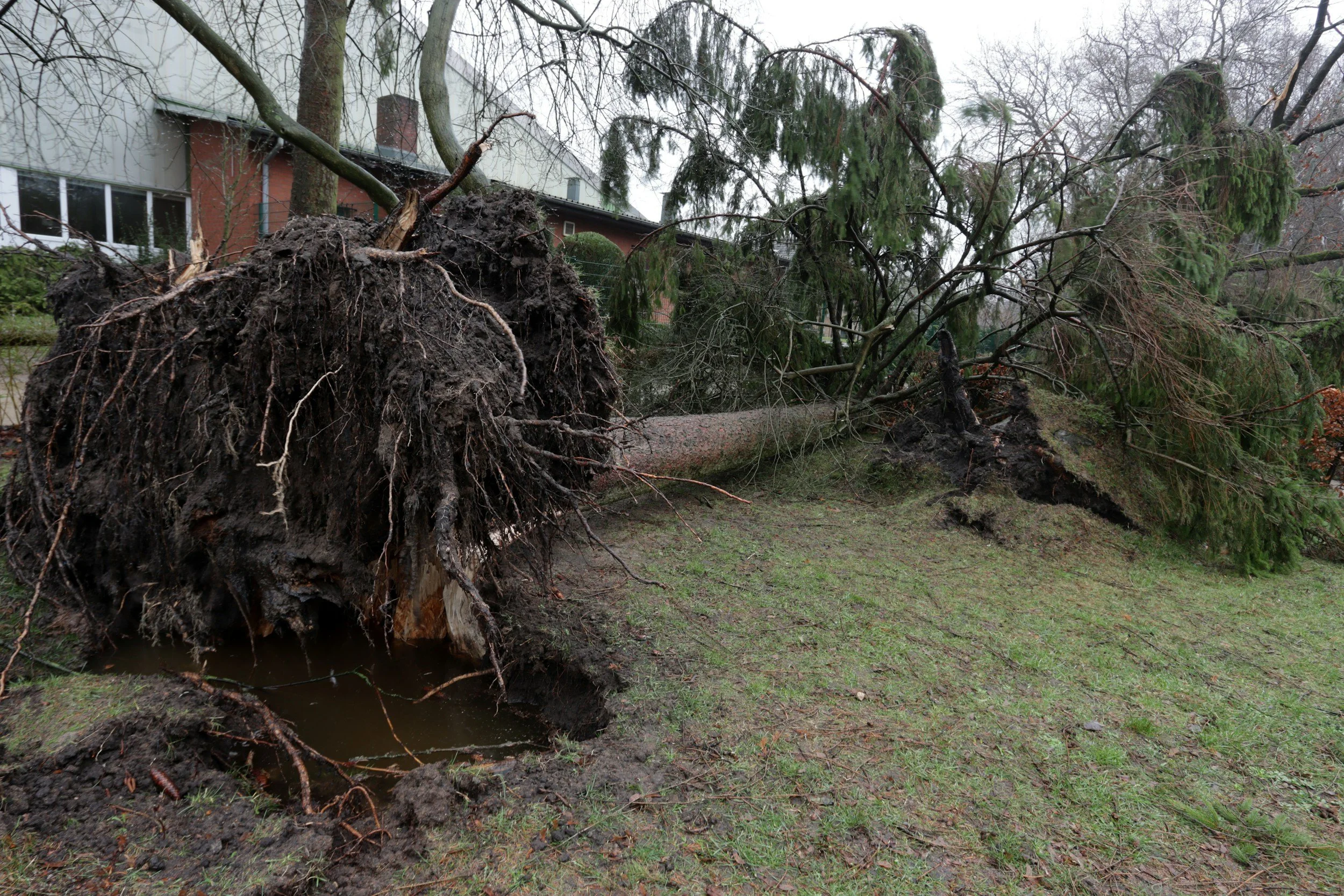
Storm Damage Cleanup
We take pride in providing reliable, fairly priced service and never inflate our rates after wind or ice storms. Please note that we prioritize storm damage, but cannot provide same-day emergency services.
What is Storm Damage?
Storm damage can leave behind broken limbs, fallen trees, and dangerous debris across your property. High winds, heavy snow, and ice can weaken trees quickly, creating safety hazards and the risk of further damage to your home or landscape.
Our team responds quickly to assess the situation and safely remove damaged or unstable trees and branches. We use proper equipment and proven techniques to restore safety, protect your property, and clean up debris efficiently.
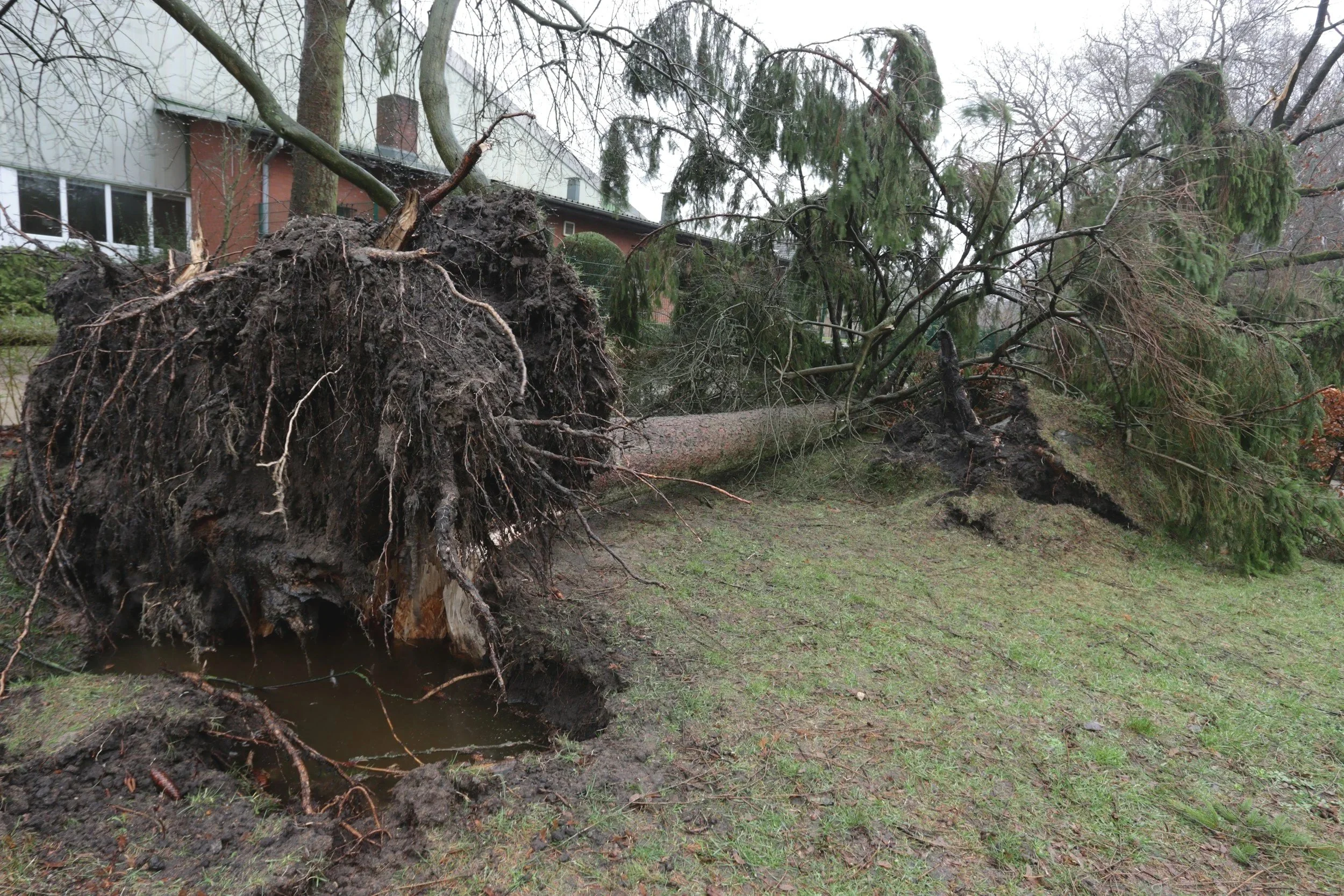
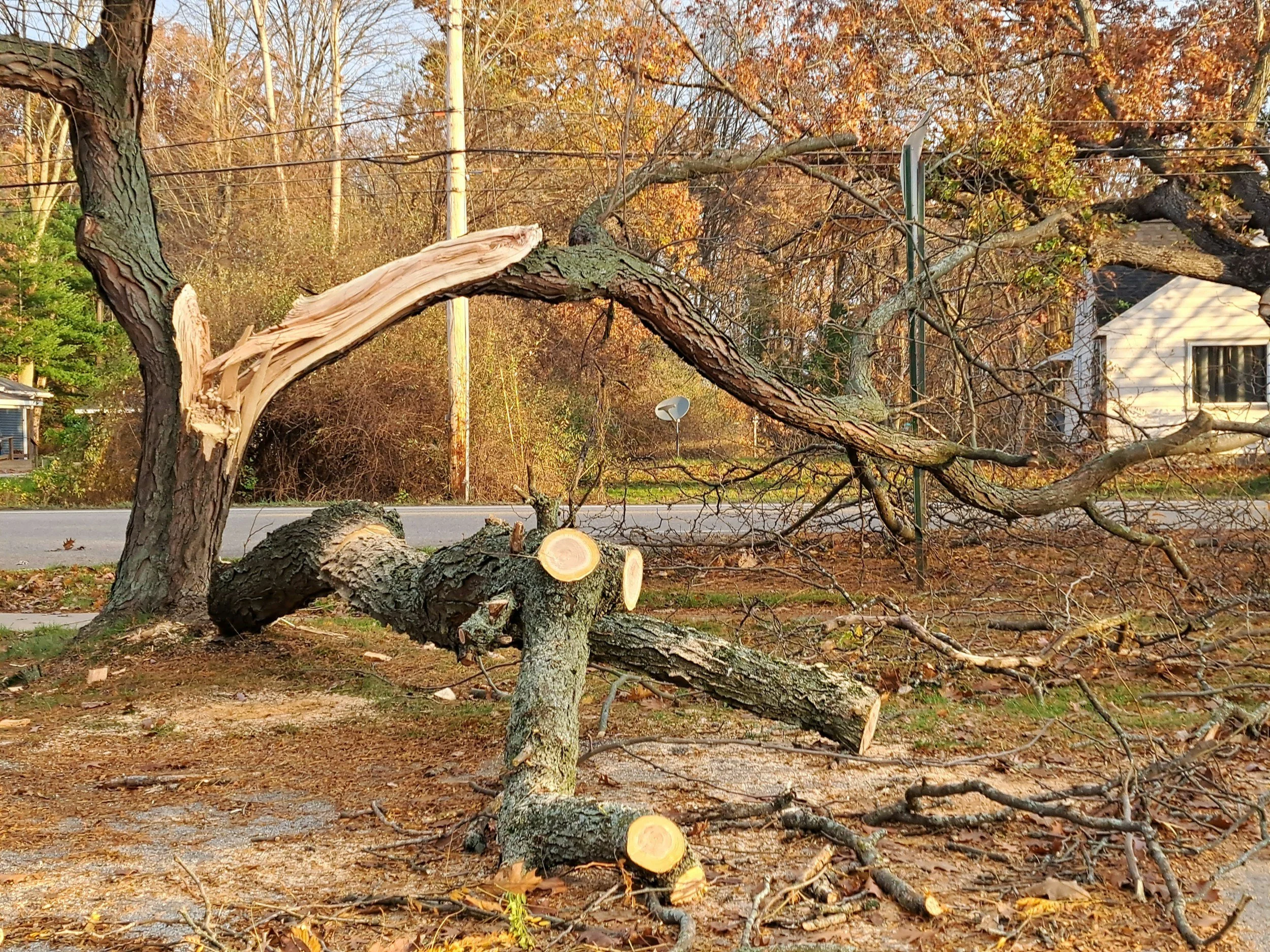
Benefits of Storm Damage Service
Restores safety by removing hazardous limbs and fallen trees
Prevents further damage to your home, driveway, and surrounding landscape
Quick response to urgent or time-sensitive situations
Professional cleanup to get your property back to normal
Peace of mind knowing the work is done safely and correctly
How Do I Know If I Need Storm Damage Cleanup?
If you see hanging or broken branches, leaning trees, or debris on your property after a storm, it’s important to have it assessed. Even if damage isn’t obvious, trees can be weakened and become unsafe over time.
If you’re unsure, our team can inspect your trees and recommend the safest and most effective next steps.
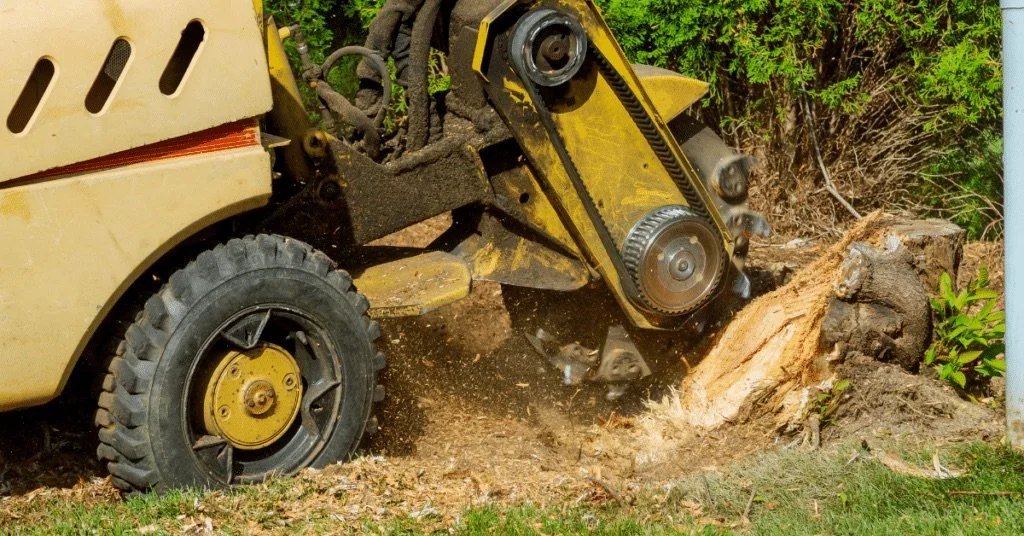
Stump Grinding
Stumps can be tenacious and unsightly, often growing new shoots even years after the tree was removed. Stump grinding is the best way to ensure the complete removal of a tree, while also enriching and aerating the soil for future planting.
What is Stump Grinding?
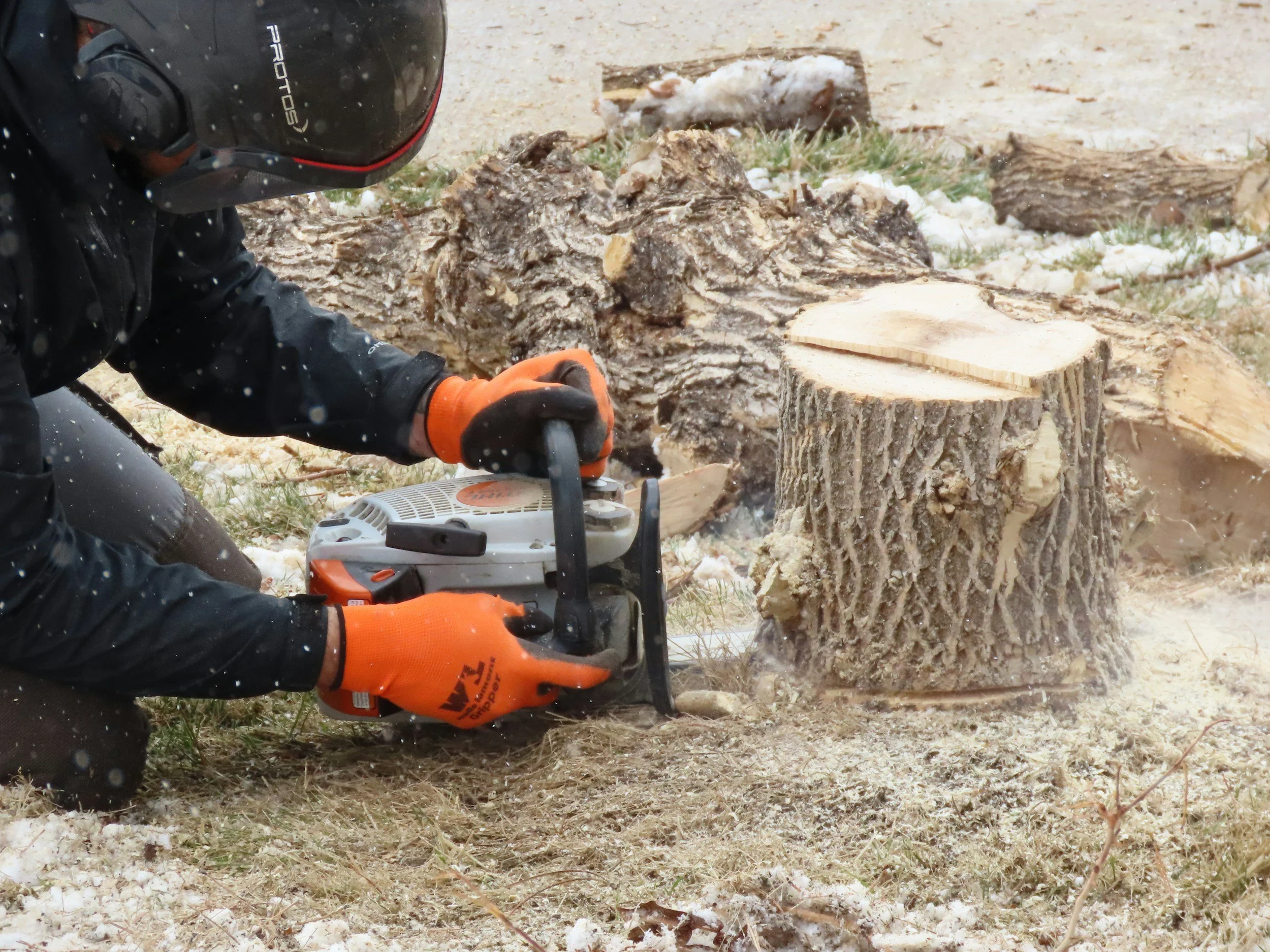
Stump grinding is the process of removing a tree stump by grinding it down below ground level using specialized equipment. Leftover stumps can be an eyesore, attract pests, and get in the way of mowing or future landscaping.
Our team safely grinds stumps down and clears the area, allowing you to reclaim your yard and prepare the space for grass, planting, or other improvements. This is often the final step after tree removal to fully restore the look and usability of your property.
Benefits of Stump Grinding
Improves appearance by removing unsightly stumps
Prevents pest issues such as insects attracted to decaying wood
Eliminates tripping hazards in your yard
Makes mowing and maintenance easier
Frees up space for new landscaping or planting
How Do I Know If I Should Remove a Stump?
You may want stump grinding if the stump is in the way of mowing, landscaping, or everyday use of your yard. Stumps that are rotting, attracting insects, or creating tripping hazards are also strong candidates for removal.
If you’re unsure, we can assess your property and recommend whether stump grinding is the right solution for your needs.
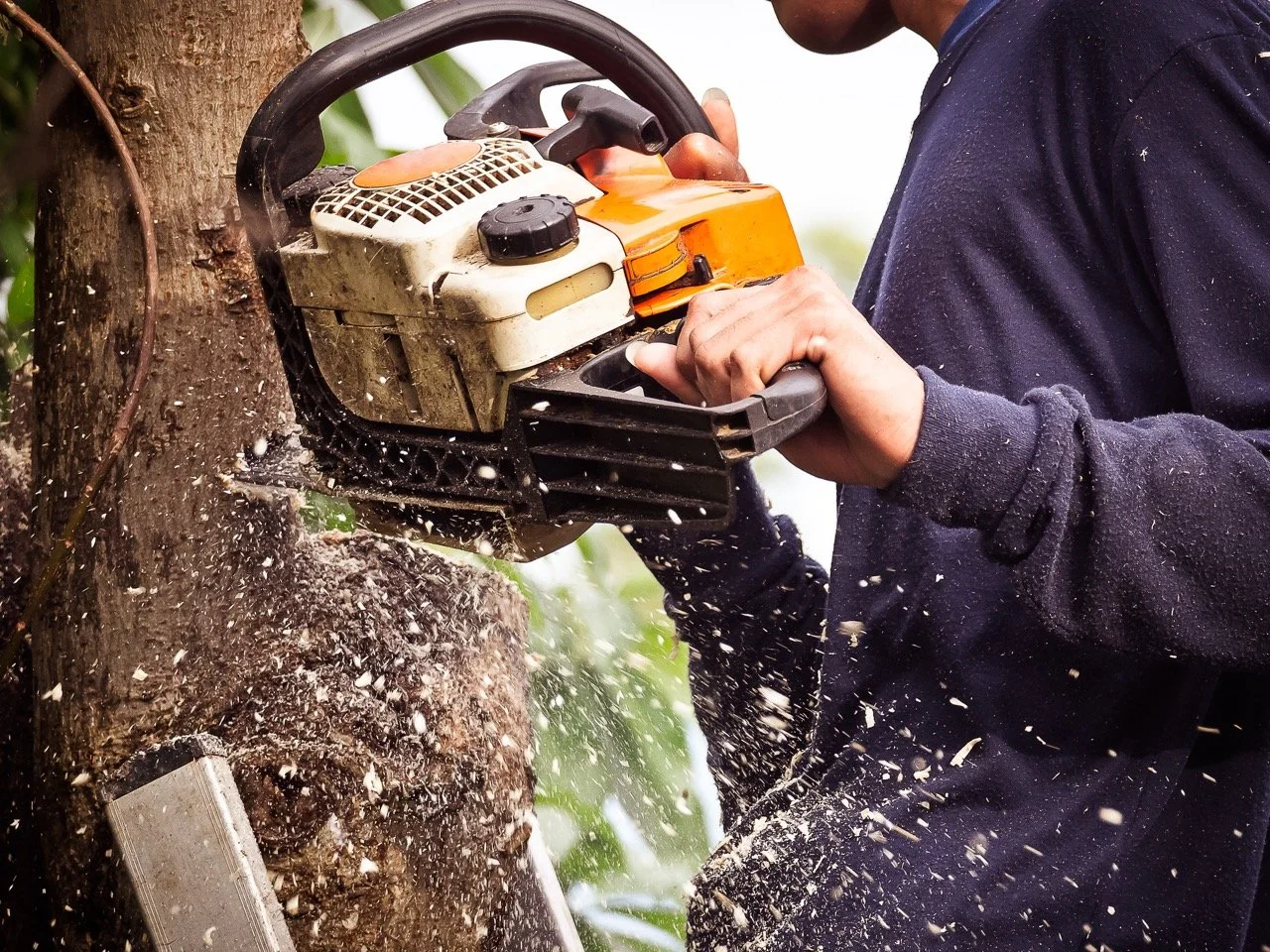
Tree Removal
While trees can add thousands to the value of your property, they can also present significant liabilities. Tree removal requires careful planning and execution to protect your assets.
What is Tree Removal?
Tree removal is the process of safely cutting down and removing a tree that is dead, damaged, or no longer suitable for its location. While many trees are valuable assets, some can become hazardous due to disease, structural issues, or proximity to homes and structures.
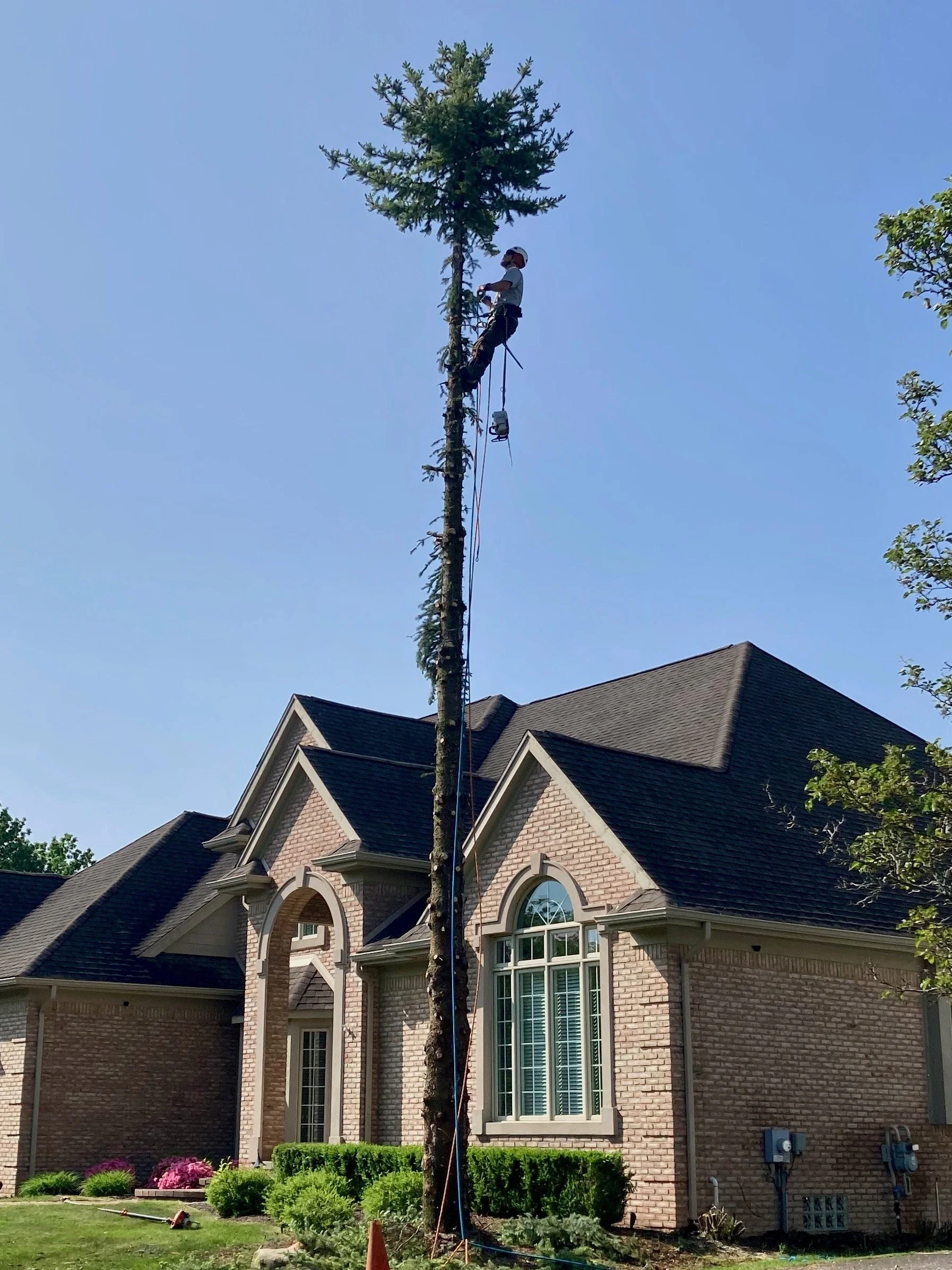
Our arborists carefully assess each situation and use proper equipment and techniques to remove trees safely and efficiently. Whether it’s a large, complex removal or a smaller tree, we take every precaution to protect your property and leave the area clean and ready for the next step.
Benefits of Tree Removal
Improves safety by removing hazardous or unstable trees
Prevents property damage to homes, driveways, and nearby structures
Stops the spread of disease or decay to surrounding trees
Creates space for new landscaping or planting
Enhances overall property appearance
How Do I Know If My Tree Needs to Be Removed?
Your tree may need removal if it is dead, severely diseased, leaning, or has large damaged or hanging limbs. Other signs include cracks in the trunk, hollow areas, root damage, or if the tree is growing too close to your home or power lines.
If you’re unsure, our arborists can evaluate your tree and recommend whether removal or another service is the best option for your property.
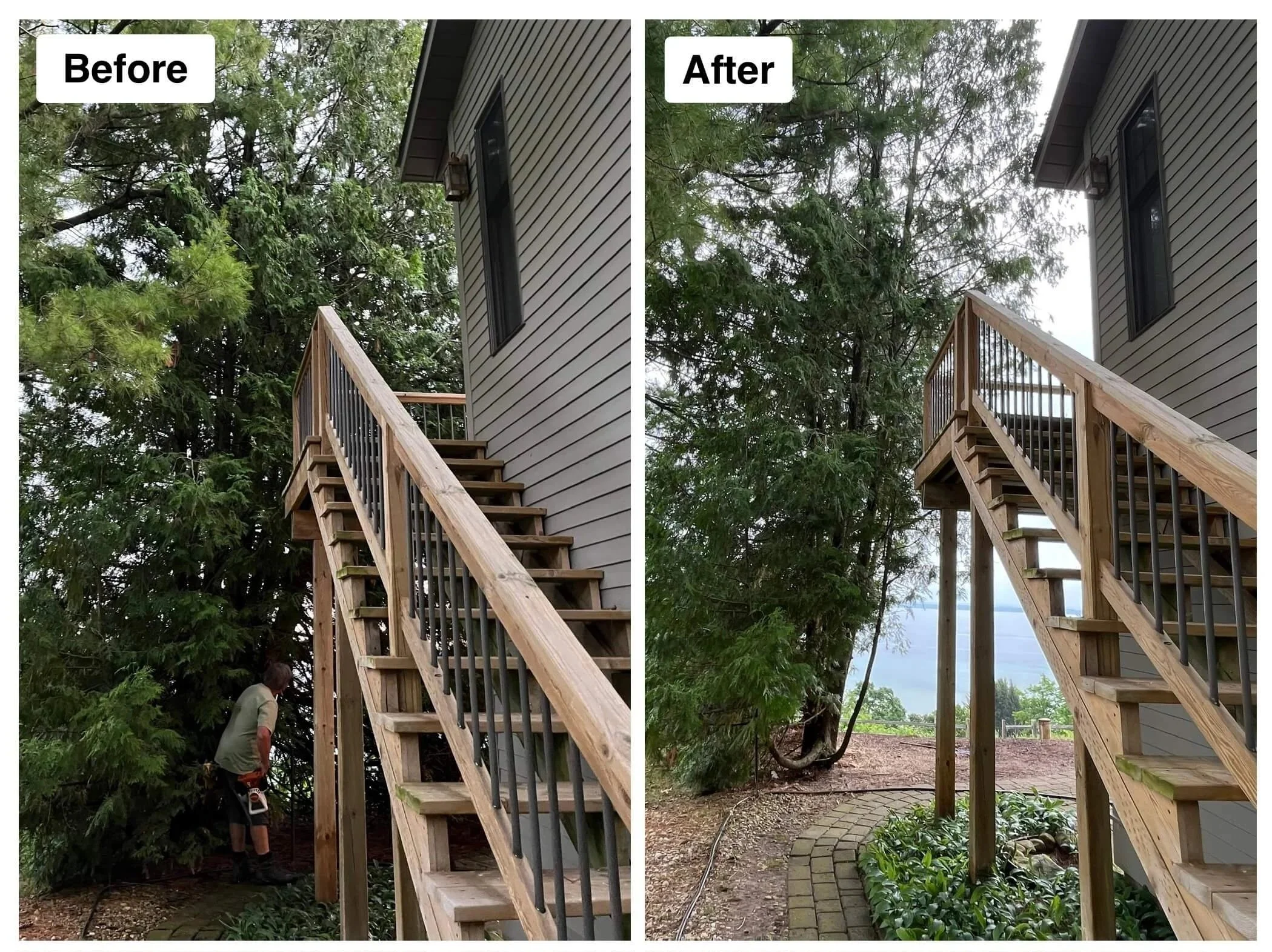
Our arborist developed a plan to help a homeowner on Old Mission Peninsula restore their view of East Bay without sacrificing privacy. Initially, the homeowner believed the cedar trees needed to be removed entirely to open up the view. After learning they also valued the natural screening the trees provided from neighboring properties, our arborist recommended a selective stem removal plan and pruning approach instead. The result was a restored view, preserved privacy, healthier trees, and significant savings by avoiding unnecessary removals.
Canopy Thinning
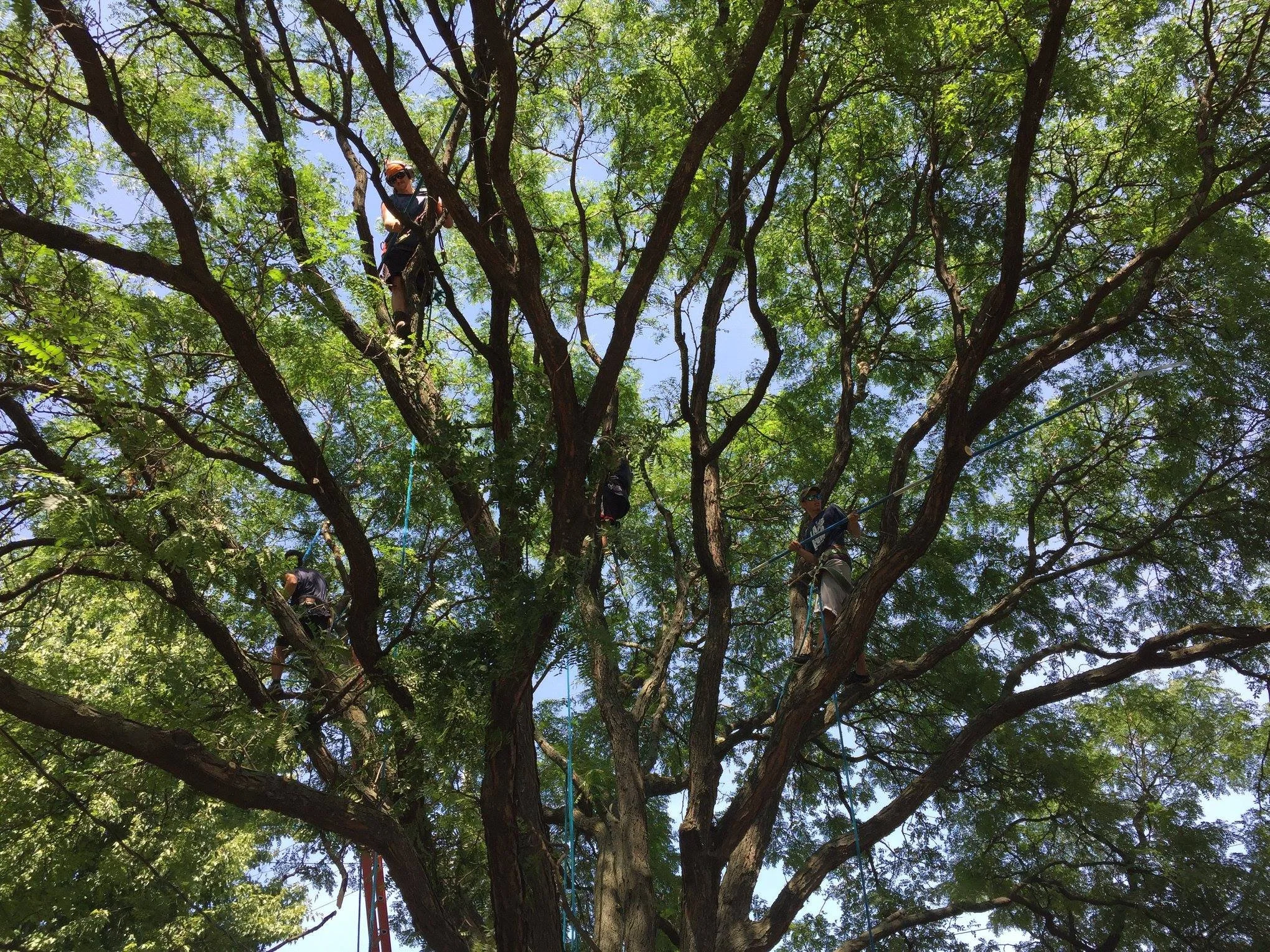
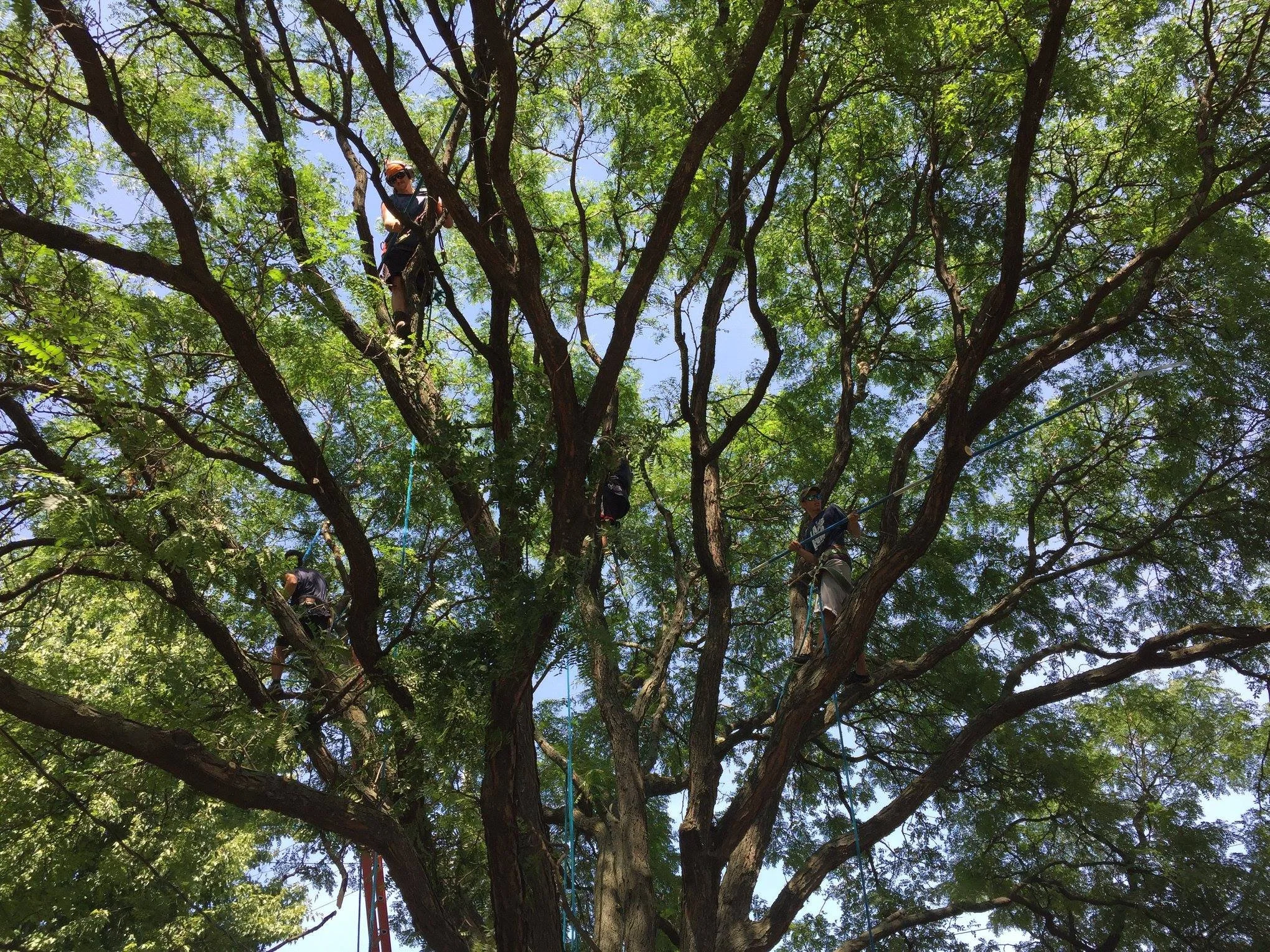
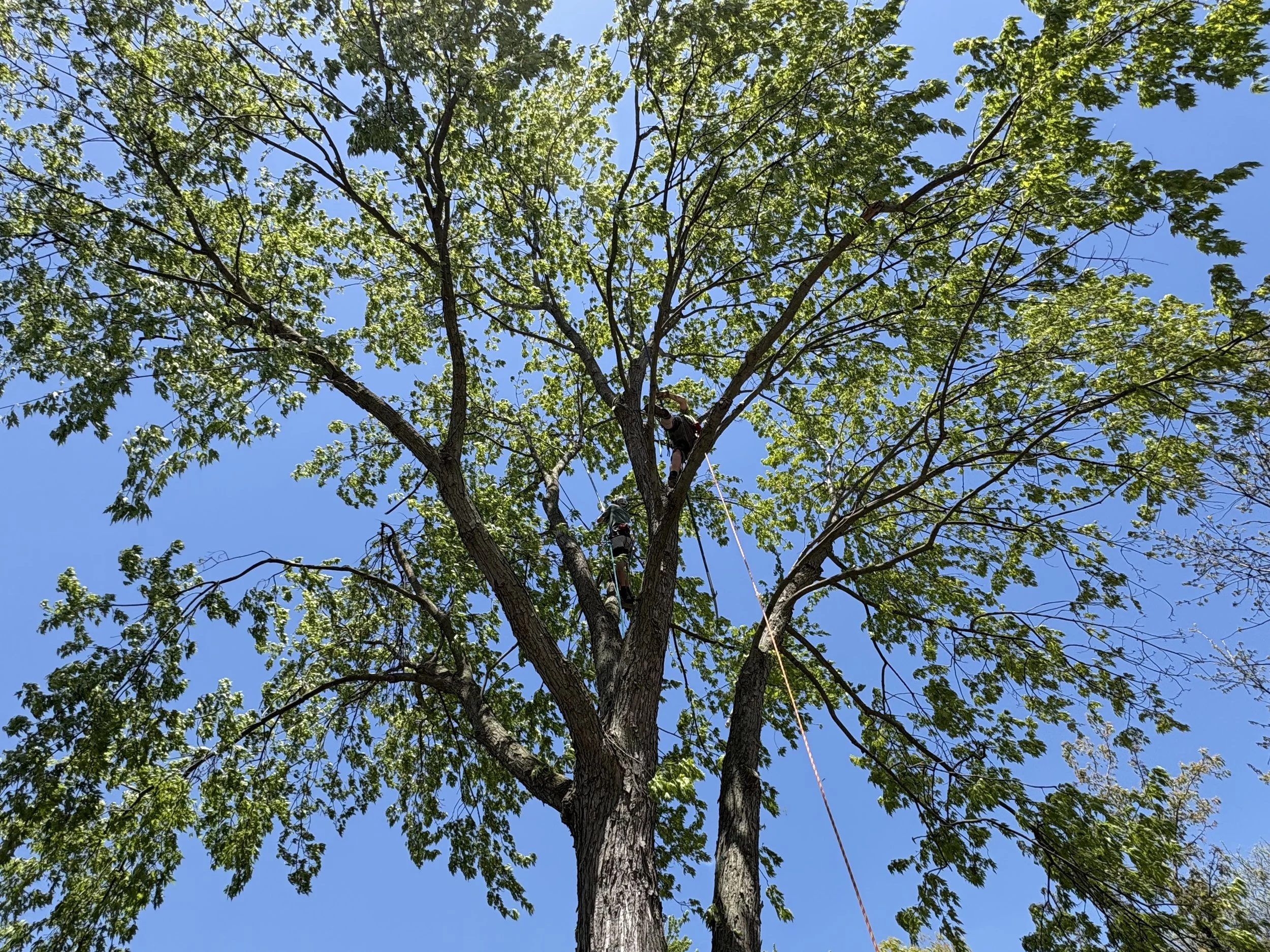
Canopy thinning is a selective pruning method that reduces excess branch density throughout a tree’s crown. By carefully removing specific interior branches, this service improves airflow and allows more sunlight to reach the inner canopy without changing the tree’s natural shape.
What is Canopy Thinning?
Canopy thinning is a selective pruning method that reduces excess branch density throughout a tree’s crown. By carefully removing specific interior branches, this service improves airflow and allows more sunlight to reach the inner canopy without changing the tree’s natural shape.
For homeowners, canopy thinning helps trees handle wind, snow, and storms more effectively while promoting healthier, more balanced growth. When done correctly, it reduces stress on heavy limbs and improves overall tree performance without making the tree look over-pruned.
Benefits of Canopy Thinning
Improves airflow and sunlight penetration throughout the canopy
Reduces wind resistance and storm-related damage
Supports healthier growth by relieving excess weight on limbs
Strengthens the stronger central leader of the tree
How Do I Know If My Tree Needs Canopy Thinning?
One of the most common signs is excessive shade beneath the tree, often causing grass or plants below to struggle due to limited sunlight. Trees with dense, crowded branches or little light reaching the interior may also benefit from thinning. You may also notice frequent limb loss during storms, heavy upper growth, or branches that rub against each other.
If you’re unsure, our arborists can assess your tree and recommend the right level of thinning to improve health, safety, and long-term structure.
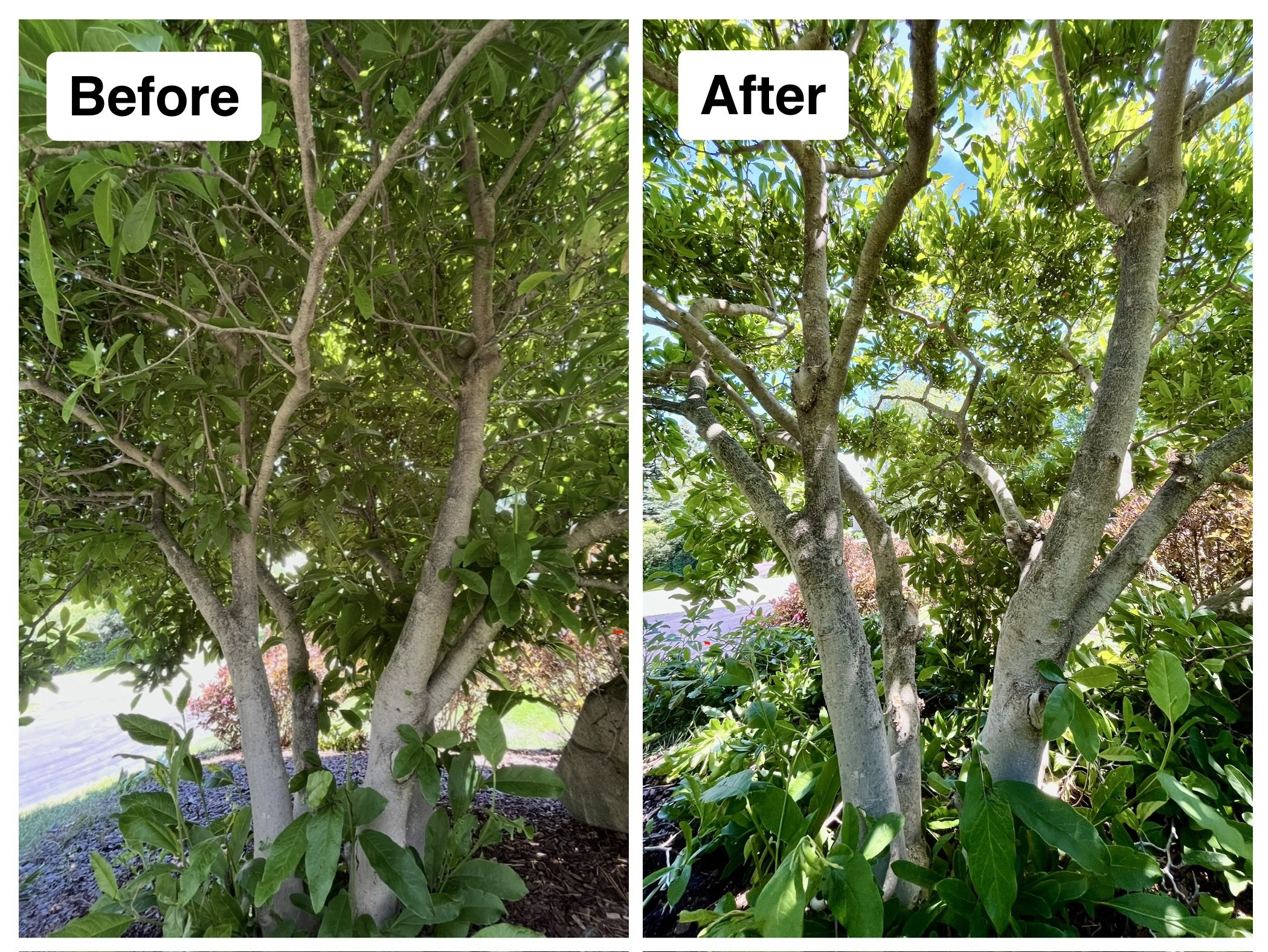
This beautiful star magnolia had become dense and overgrown, limiting light penetration and airflow throughout the canopy. We carefully thinned select interior branches to reduce congestion while preserving the tree’s natural shape and character.
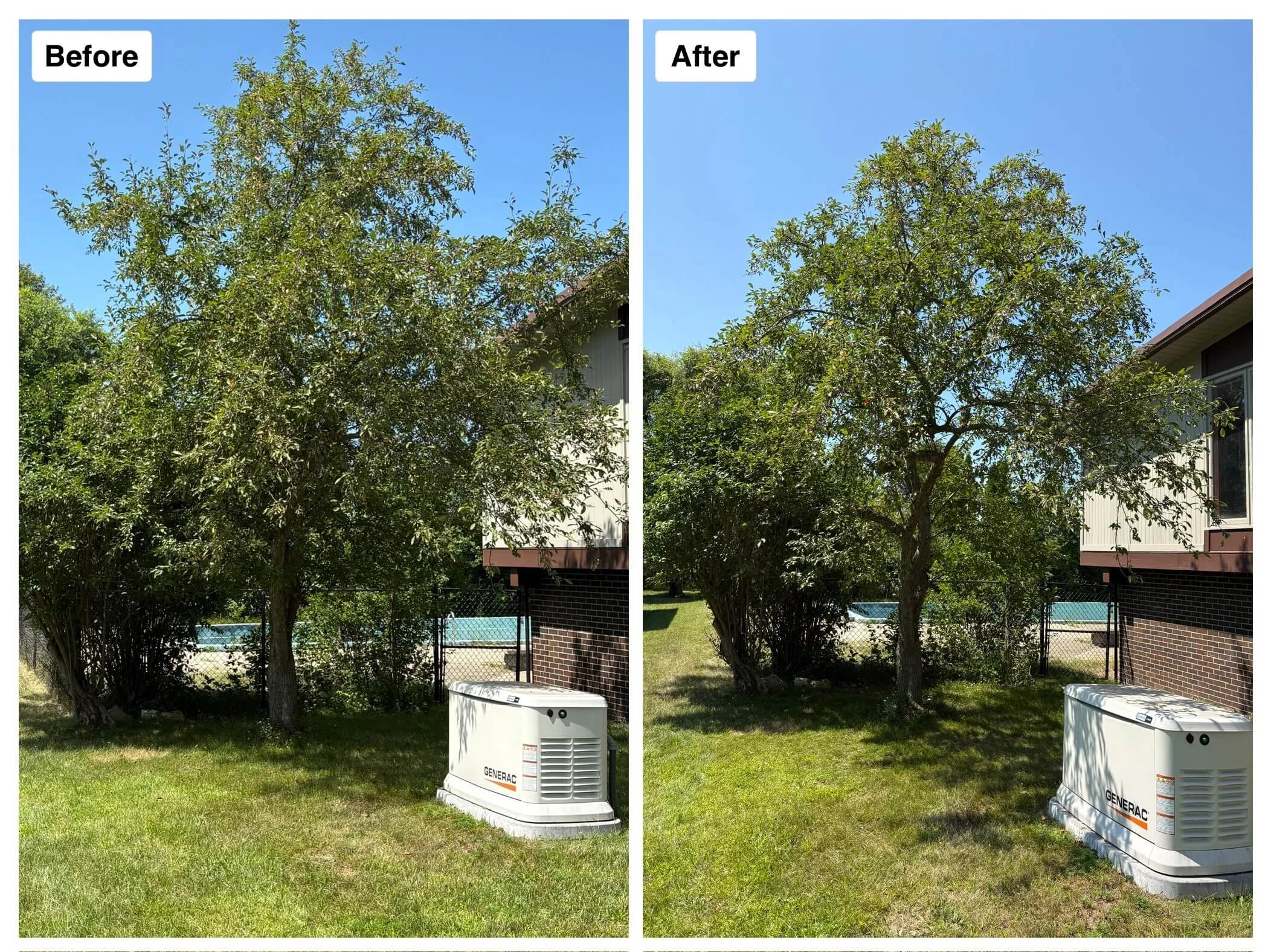
Here is a Crabapple tree we recently thinned out to help the plant remain healthy.
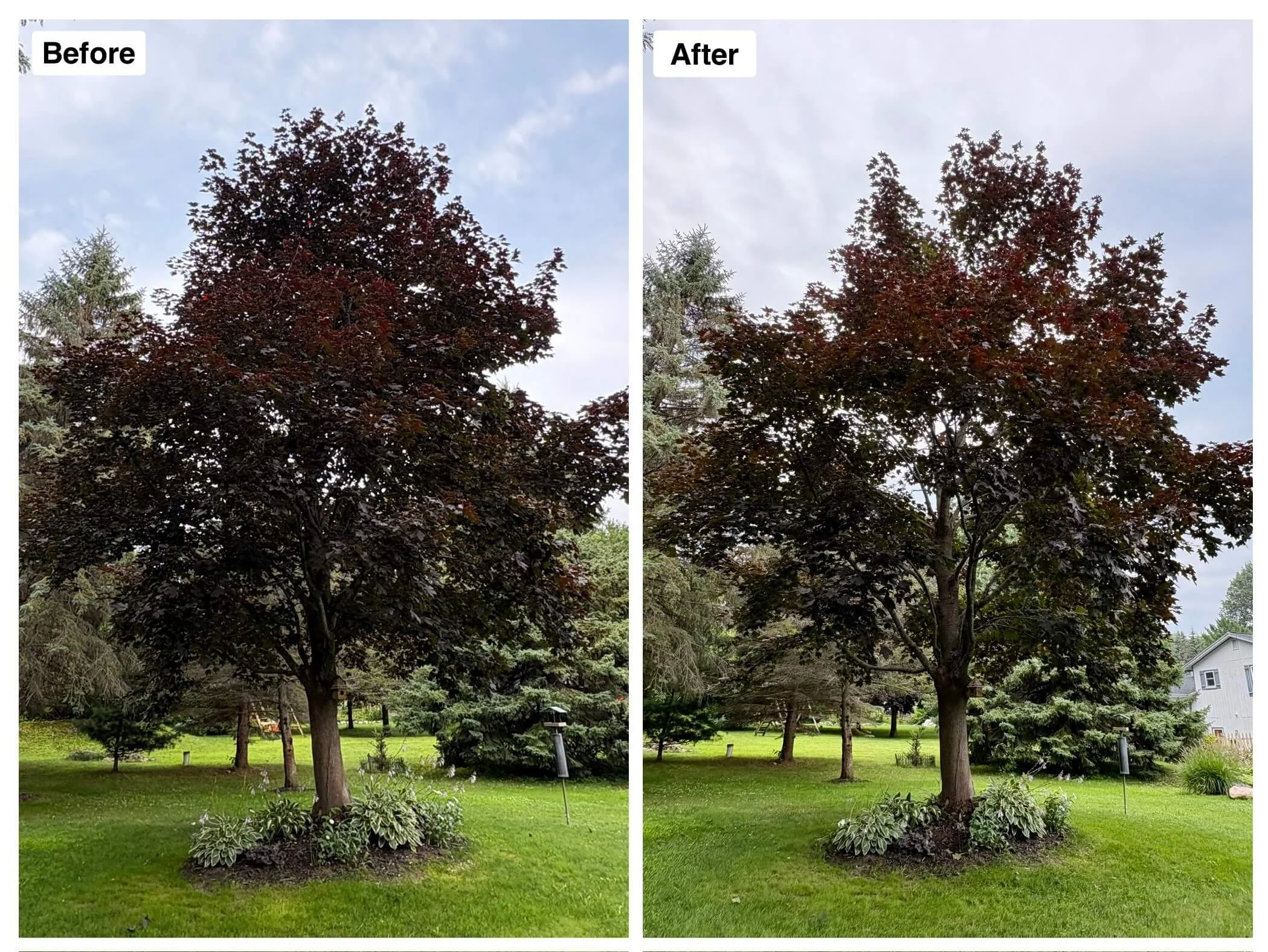
This Crimson Maple was given a moderate canopy thinning to help increase air circulation throughout the canopy.
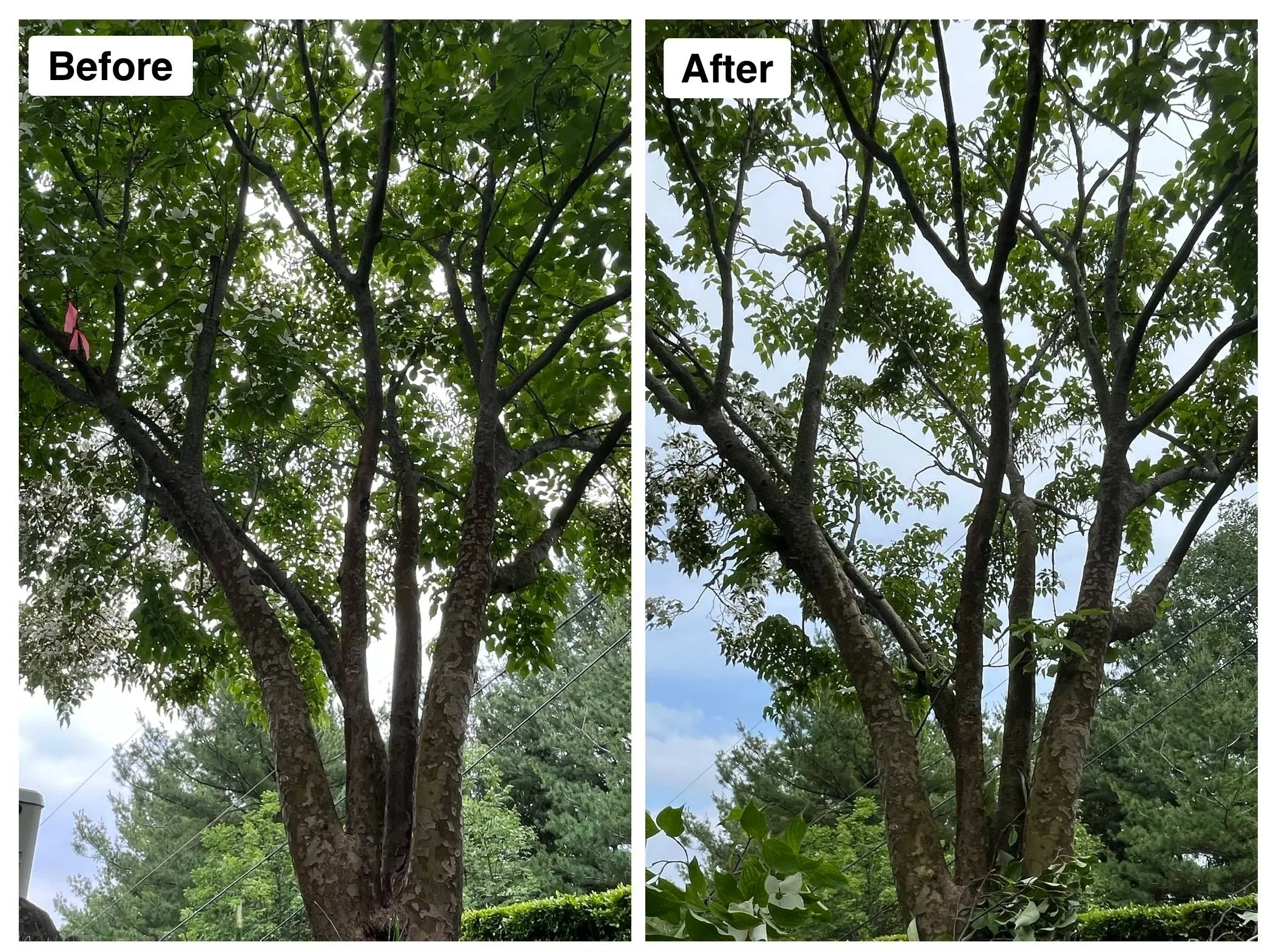
Dogwoods like this benefit from selective canopy thinning to improve airflow, increase sunlight penetration, reduce disease risk, and promote long-term tree health.
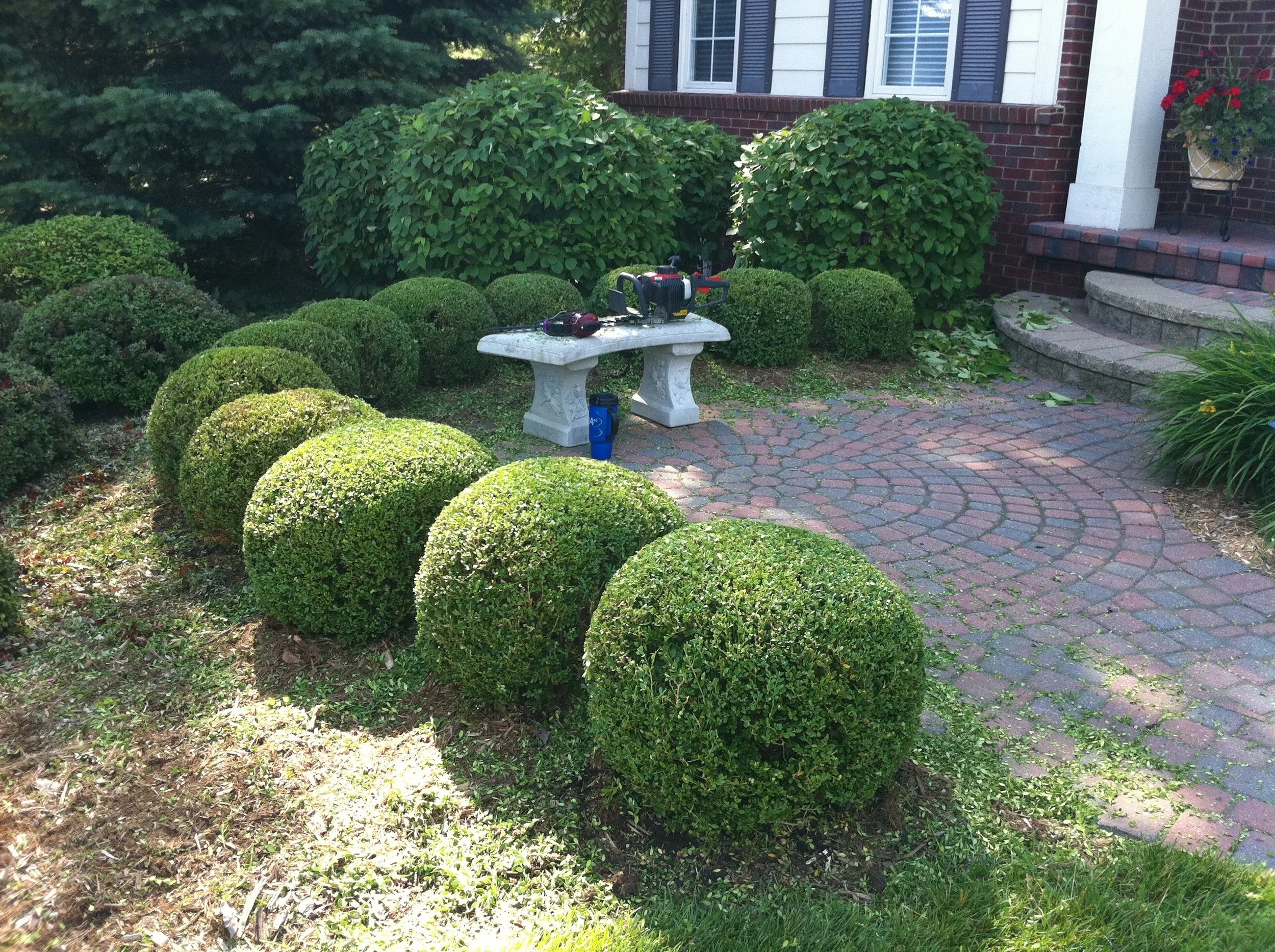
Tree and Shrub Shaping
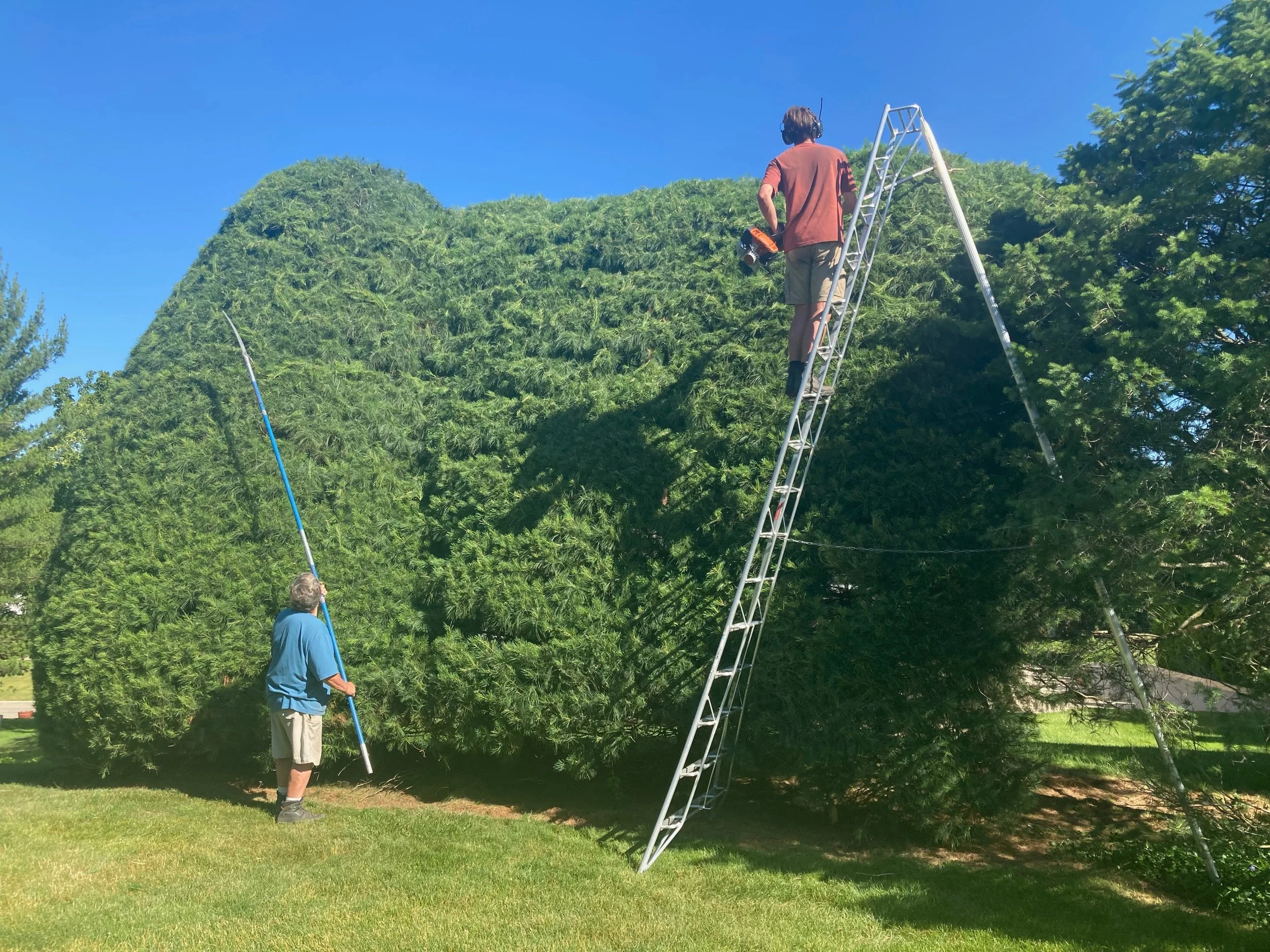
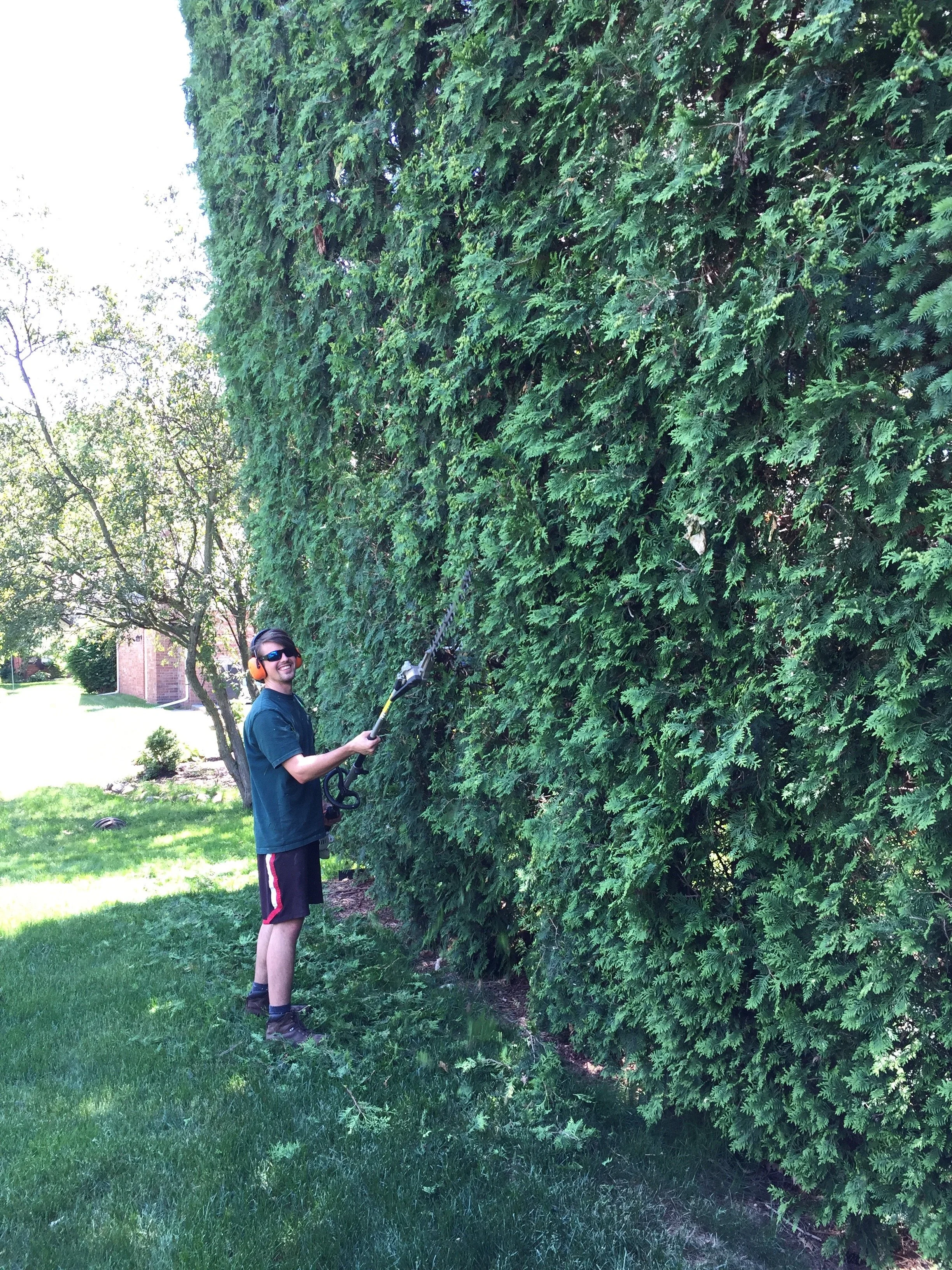
Many homeowners prefer more a manicured and geometric landscaping design. This style requires more frequent upkeep and precise trimming to avoid damaging your trees and shrubs.
What is Shaping?
Shaping is a method focused on creating a defined, manicured appearance through precise and intentional trimming. This approach emphasizes clean lines, symmetry, and controlled growth to achieve a more formal or geometric landscape design.
Many homeowners prefer this style for its polished look, but it requires careful technique and more frequent maintenance to avoid stressing or damaging plants. Our arborists shape trees and shrubs with proper timing and attention to plant health, ensuring the desired aesthetic is achieved while supporting long-term structure and vitality.
Benefits of Shaping
Creates a clean, manicured look with defined shapes and clear lines
Keeps plants within their intended size and prevents overgrowth
Maintains symmetry and structure throughout the growing season
Shaping vs. Natural Contour Pruning
Shaping focuses on creating a neat, manicured look through careful trimming. This approach is ideal for homeowners who prefer a formal landscape with clean lines and symmetry, but it does require more frequent maintenance to keep plants looking their best.
Natural contour pruning focuses on working with a plant’s natural growth rather than forcing a specific shape. This approach is ideal for homeowners who prefer a natural, balanced look and want healthier plants with less frequent maintenance over time.
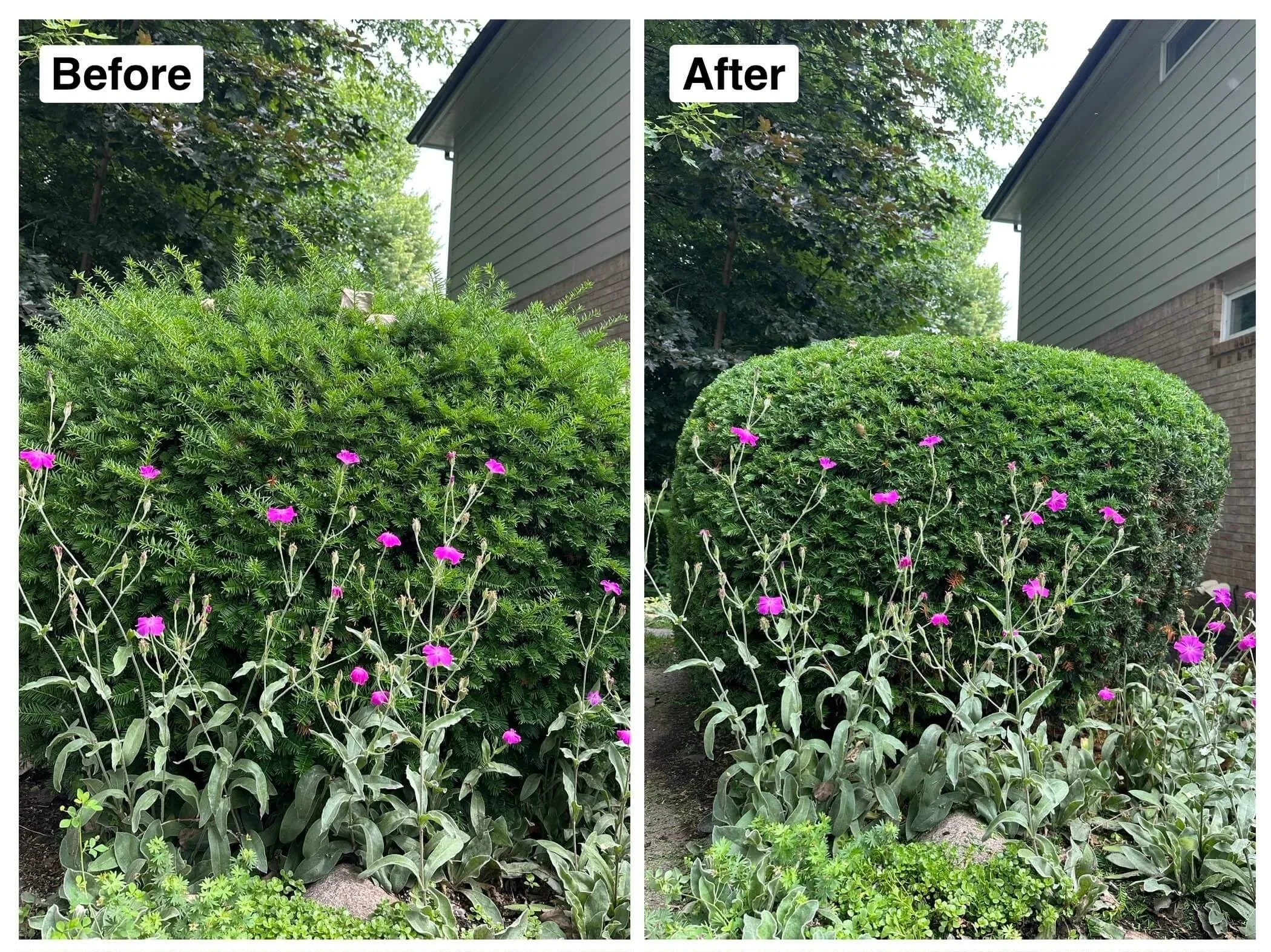
This Taxus (Yew) was properly trimmed.
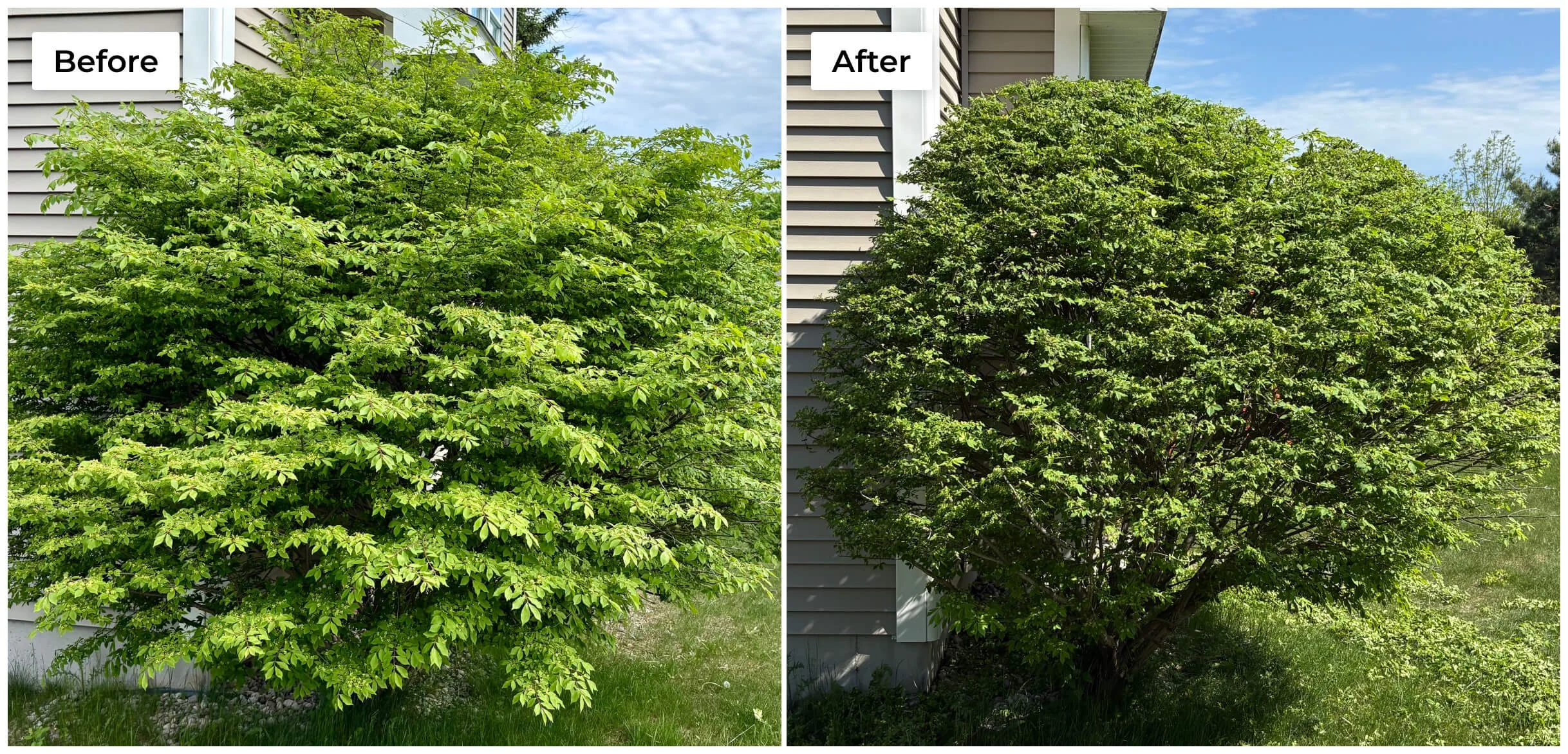
This Burning Bush was shaped to make smaller.
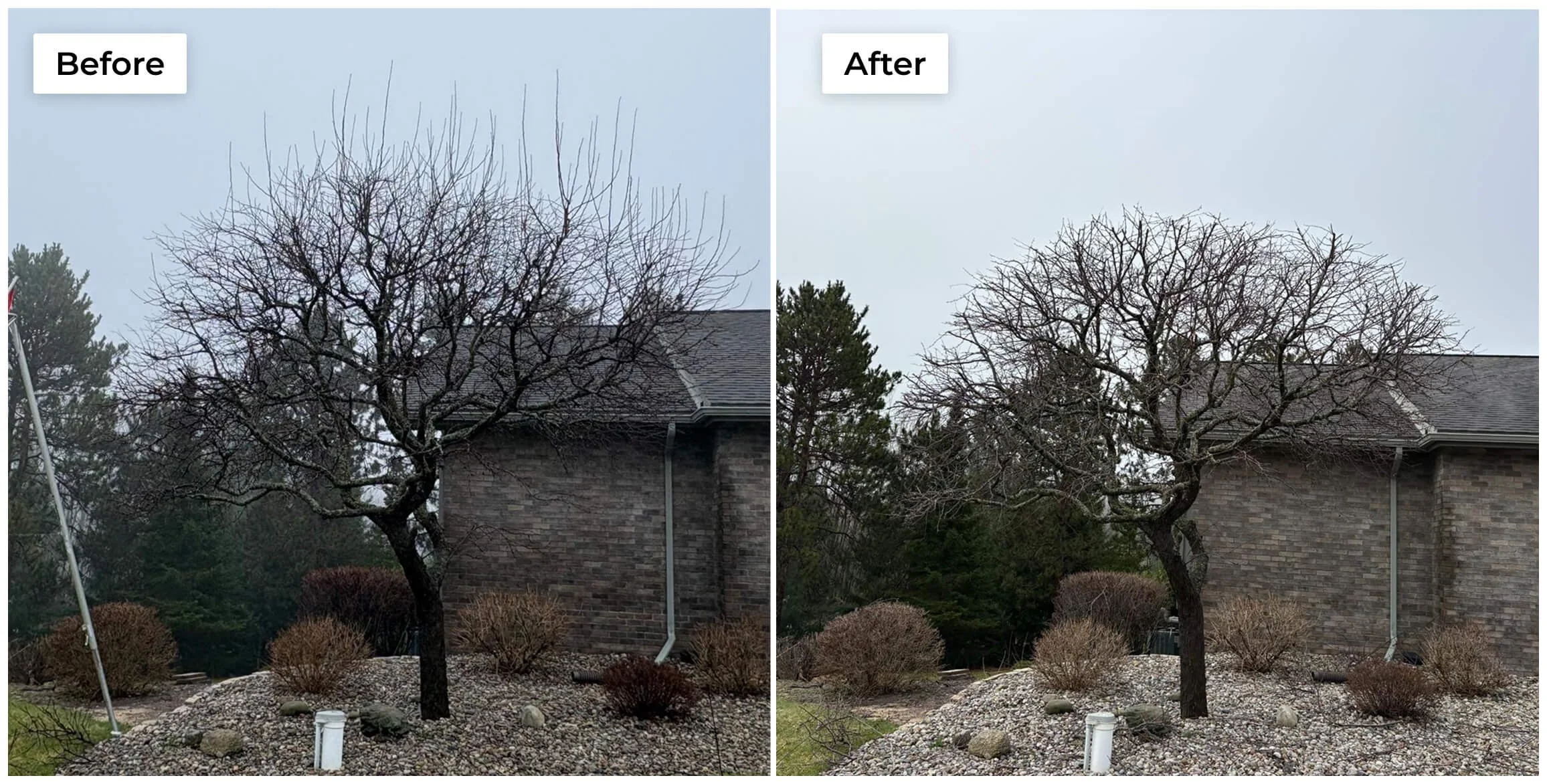
Winter is the best time to perform more significant size reduction on trees and shrubs.
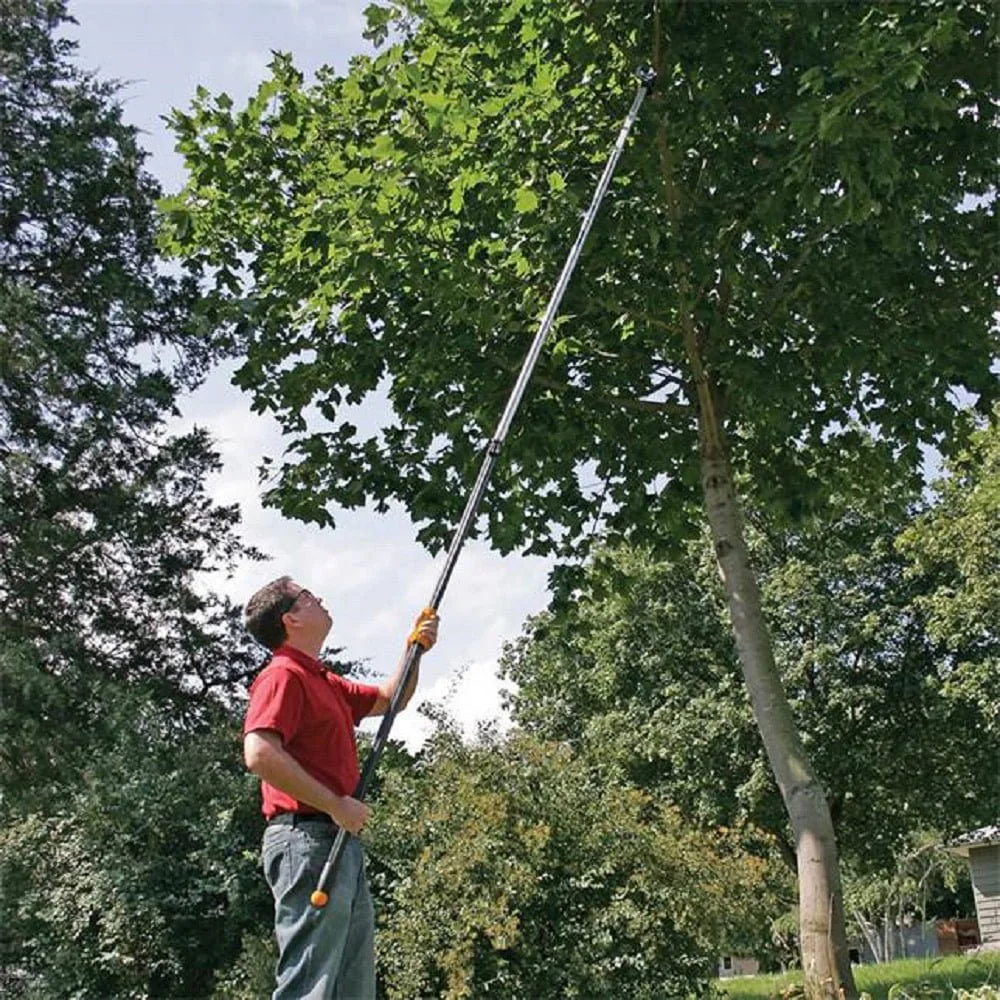
Natural Contour Pruning
Natural contour pruning follows a tree or shrub’s natural growth pattern to improve structure and plant health without forcing an artificial shape. This selective approach promotes strong, healthy growth while maintaining a natural, well-balanced appearance.
What is Natural Contour Pruning?
Natural contour pruning of trees and shrubs (also known as hand pruning or selective pruning) focuses on making intentional cuts back into the interior of the plant rather than trimming only the outer surface. This encourages balanced growth from within the canopy and creates natural openings that allow sunlight and air to reach the center of the plant.
Improved airflow and light penetration reduce the likelihood of fungus and disease while supporting stronger, healthier growth. For flowering shrubs, this approach also considers the difference between fruiting wood and vegetative growth, allowing unnecessary shoots to be removed and promoting better flowering.
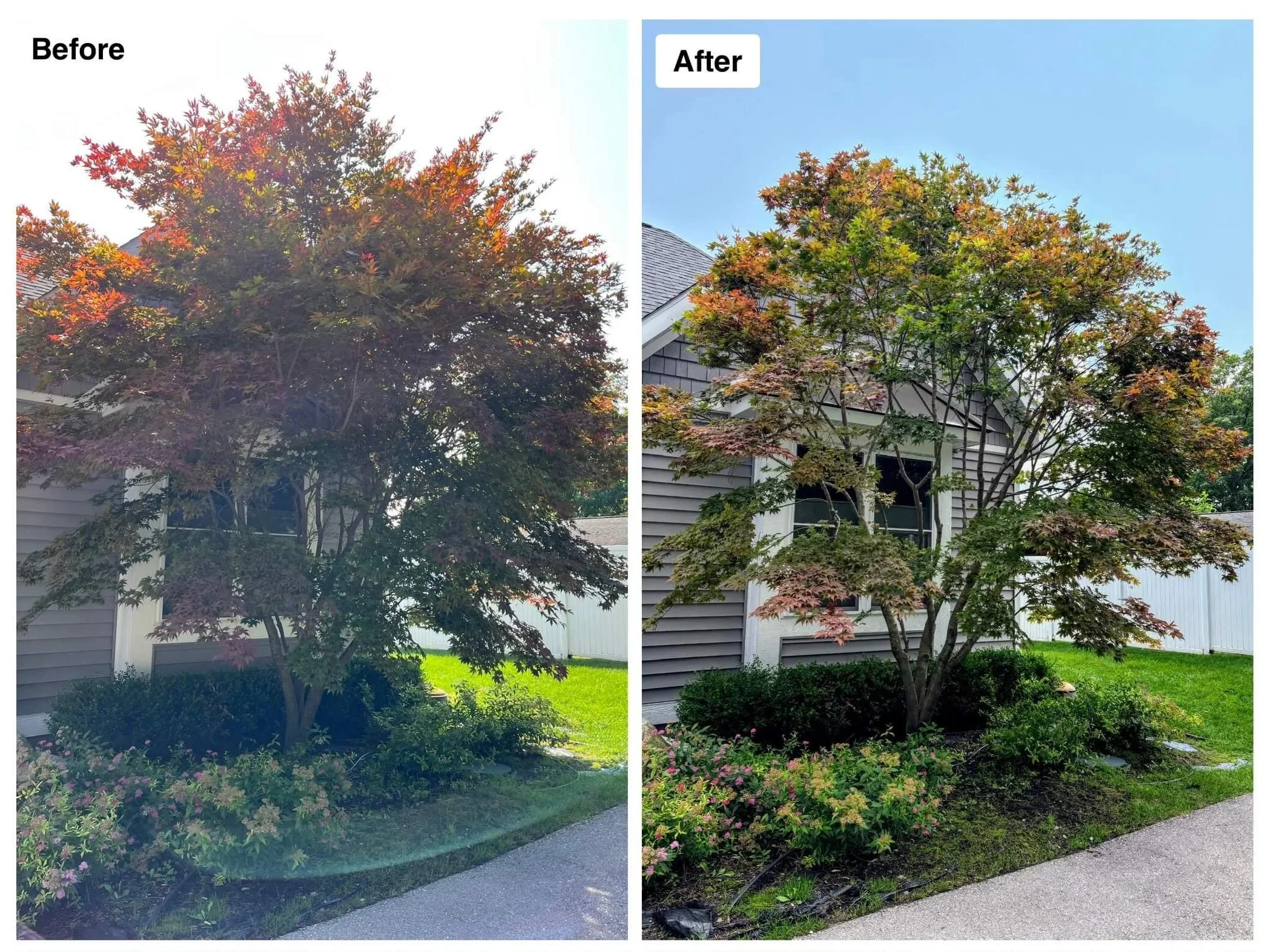
Natural pruning is the best way to manage the size of trees like this Japanese maple while maintaining their natural shape and beauty.
Benefits of Natural Contour Pruning
Promotes healthier growth by improving airflow and sunlight penetration within the canopy
Preserves natural form by working with the plant’s natural growth pattern rather than forcing a shape
Reduces disease risk by limiting dense, shaded areas where fungus and pests can thrive
Encourages better flowering by selectively removing non-productive or excessive growth
Controls plant size naturally without creating an over-trimmed or artificial appearance
Supports long-term structure resulting in stronger branches and fewer corrective prunes over time
Shaping vs. Natural Contour Pruning
Shaping is a non-selective pruning method that trims the outer surface of a plant into a uniform shape. It may be best for homeowners who prefer a tightly manicured look or have formal hedges that require consistent, controlled sizing.
Natural contour pruning is a selective pruning method that follows a plant’s natural growth pattern by making interior cuts. It is ideal for homeowners who want healthier plants, improved airflow and light, and a natural appearance that supports long-term growth.
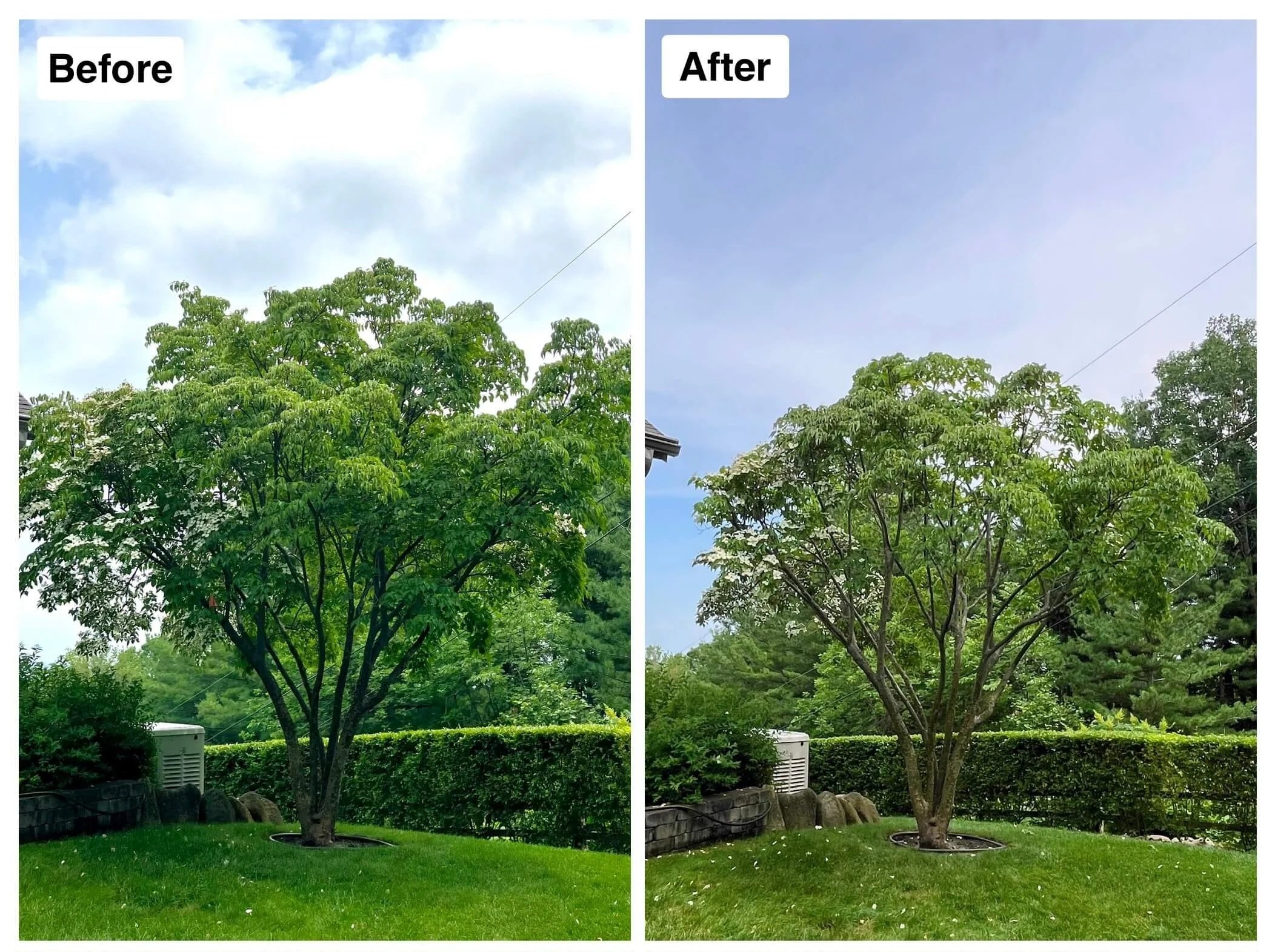
This customer’s dogwood was naturally pruned to reduce its overall size while preserving its natural beauty and graceful form.
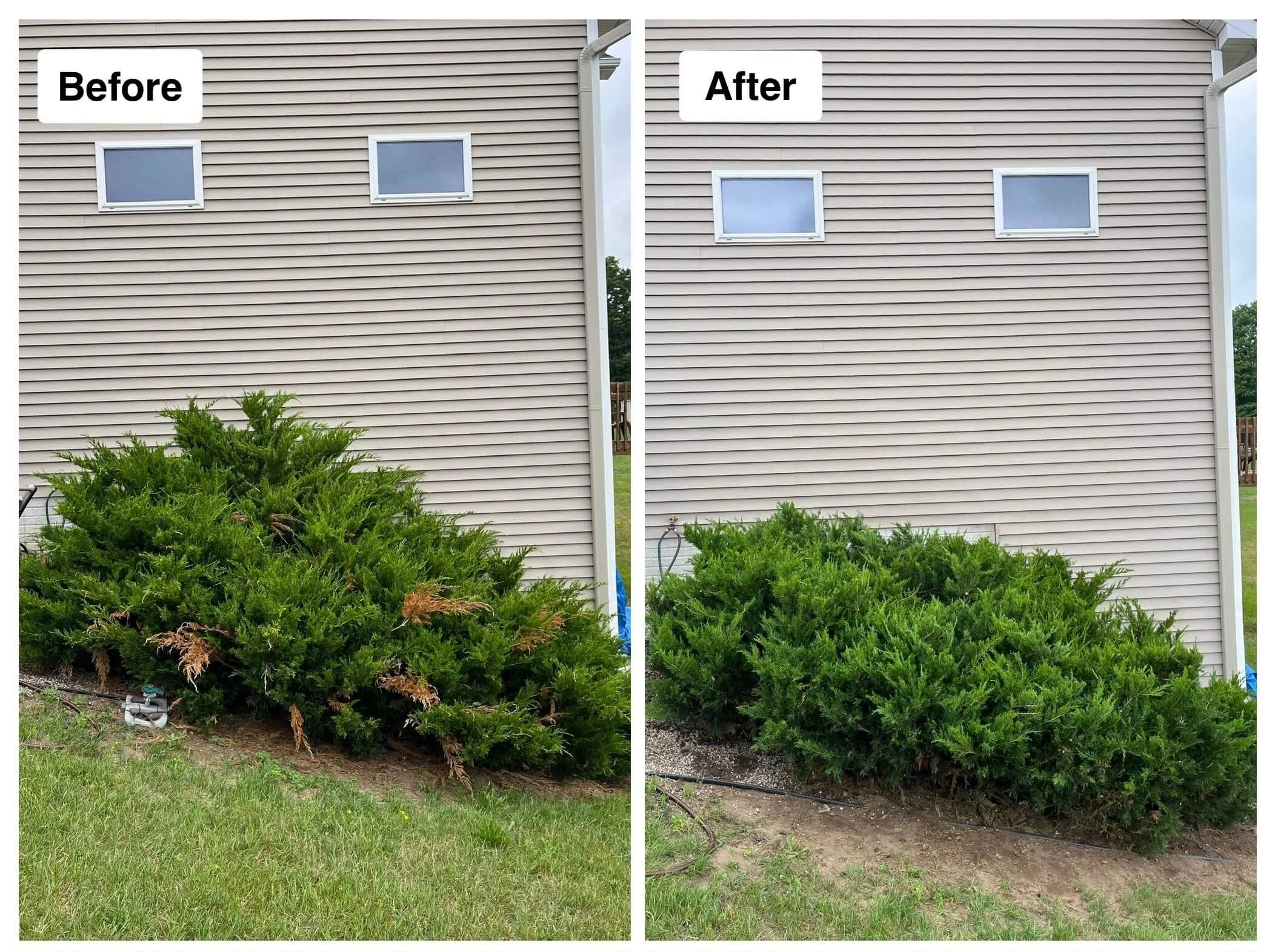
By naturally pruning this arborvitae shrub, we were able to preserve its natural form while promoting healthy, vigorous growth.
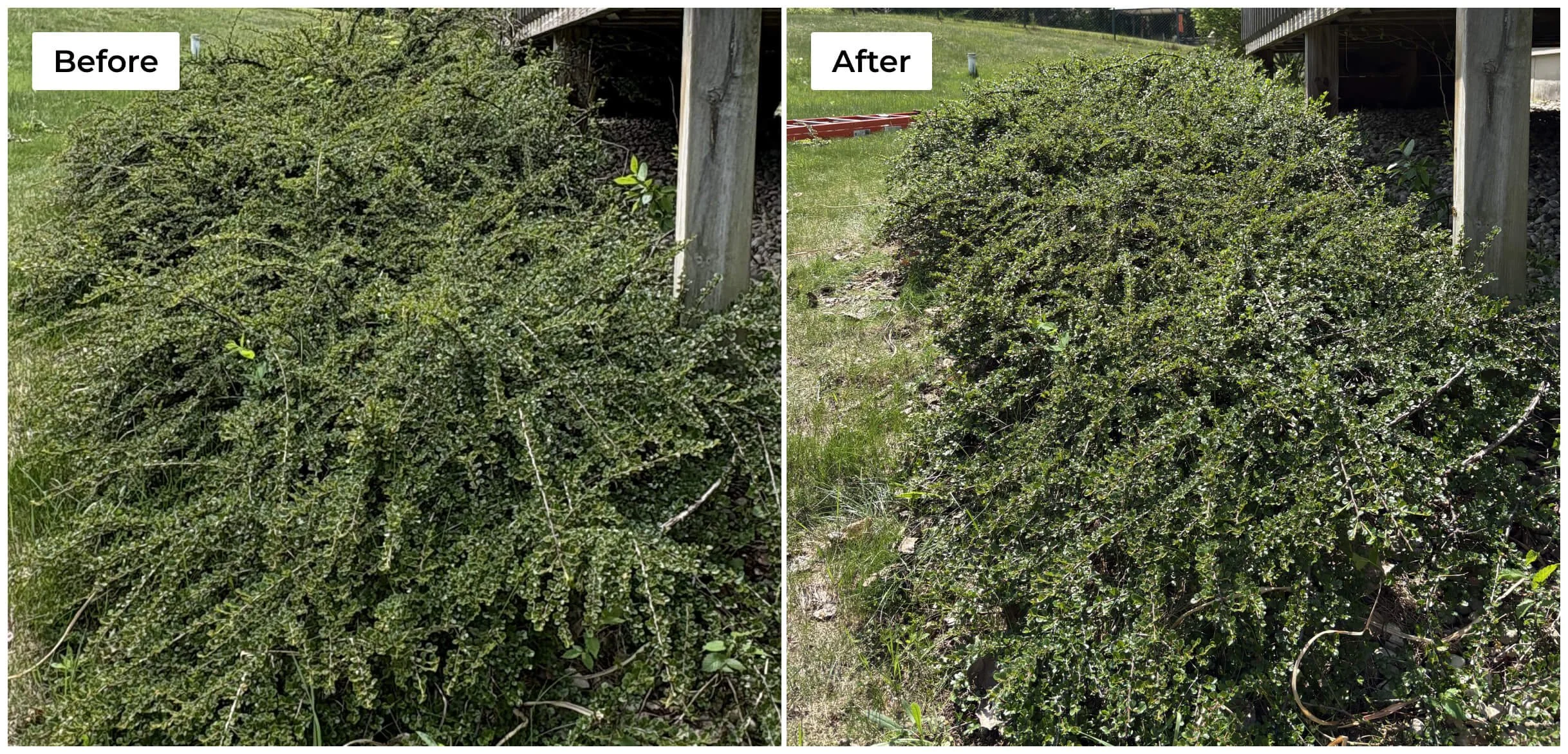
We utilized natural contour pruning techniques to decrease the size of this cotoneaster shrub.
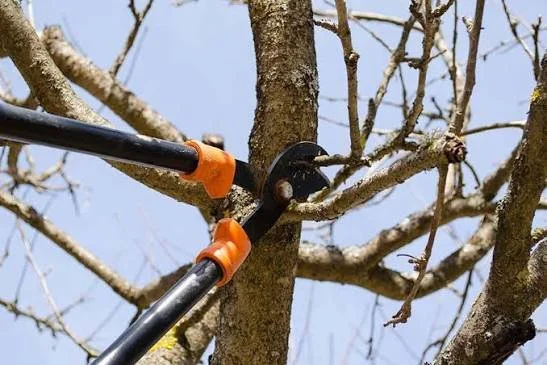
Deadwood Removal
Dying branches are a natural and unavoidable part of the lifecycle of any tree or shrub, but they can create hazards, invite rot and disease, or detract from the appearance of your landscape.
What is Deadwood Removal?
Deadwood removal focuses on identifying and removing dead, dying, or non-living branches from trees and shrubs. While dead branches are a natural part of a plant’s lifecycle, they can become safety hazards, invite pests and disease, and negatively impact the overall appearance of your landscape.
Our arborists carefully remove deadwood to improve tree health, reduce risk to people and property, and keep your trees looking clean and well maintained. This service is often recommended as part of routine maintenance or after storms, drought, or disease stress.
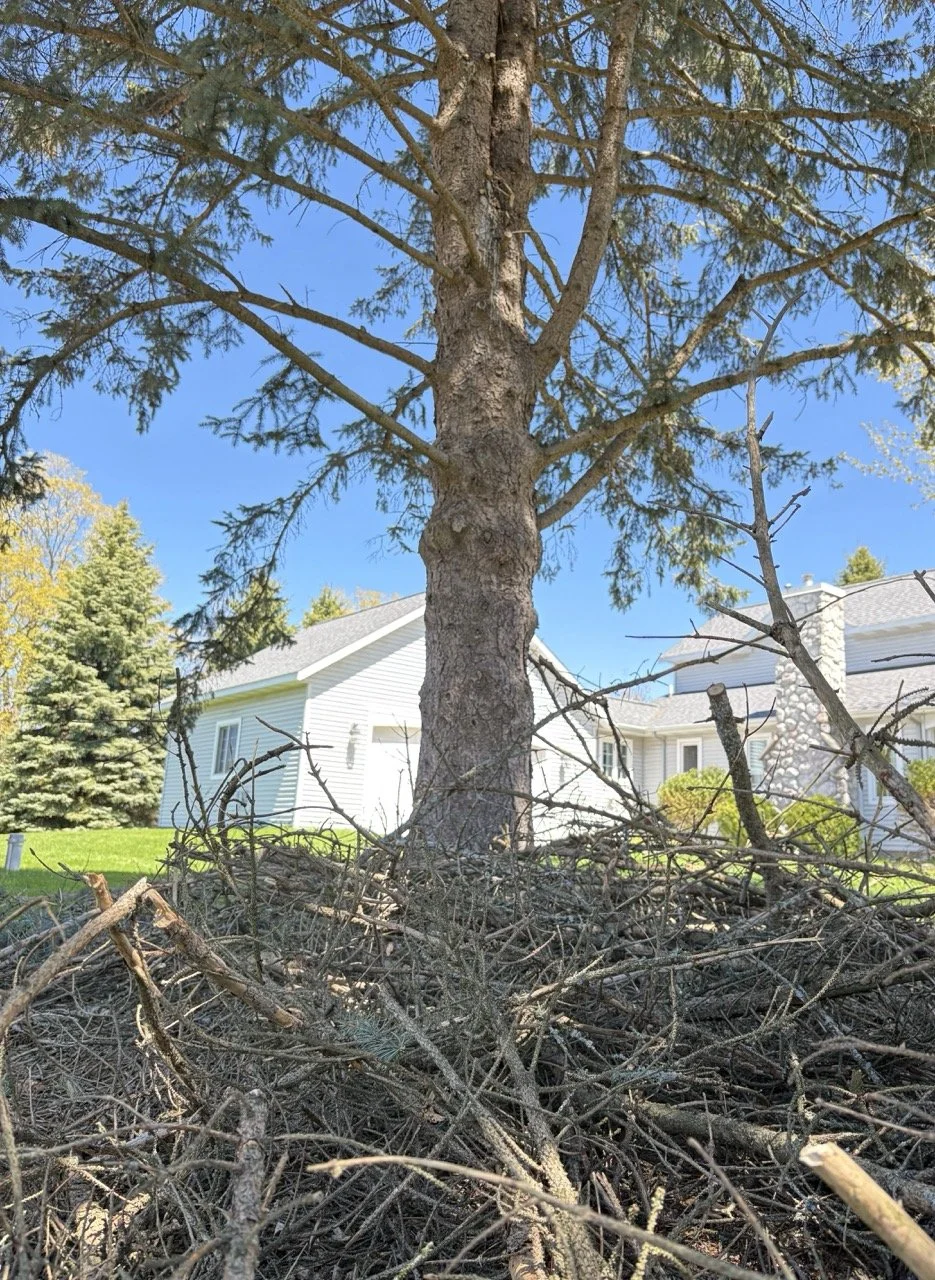
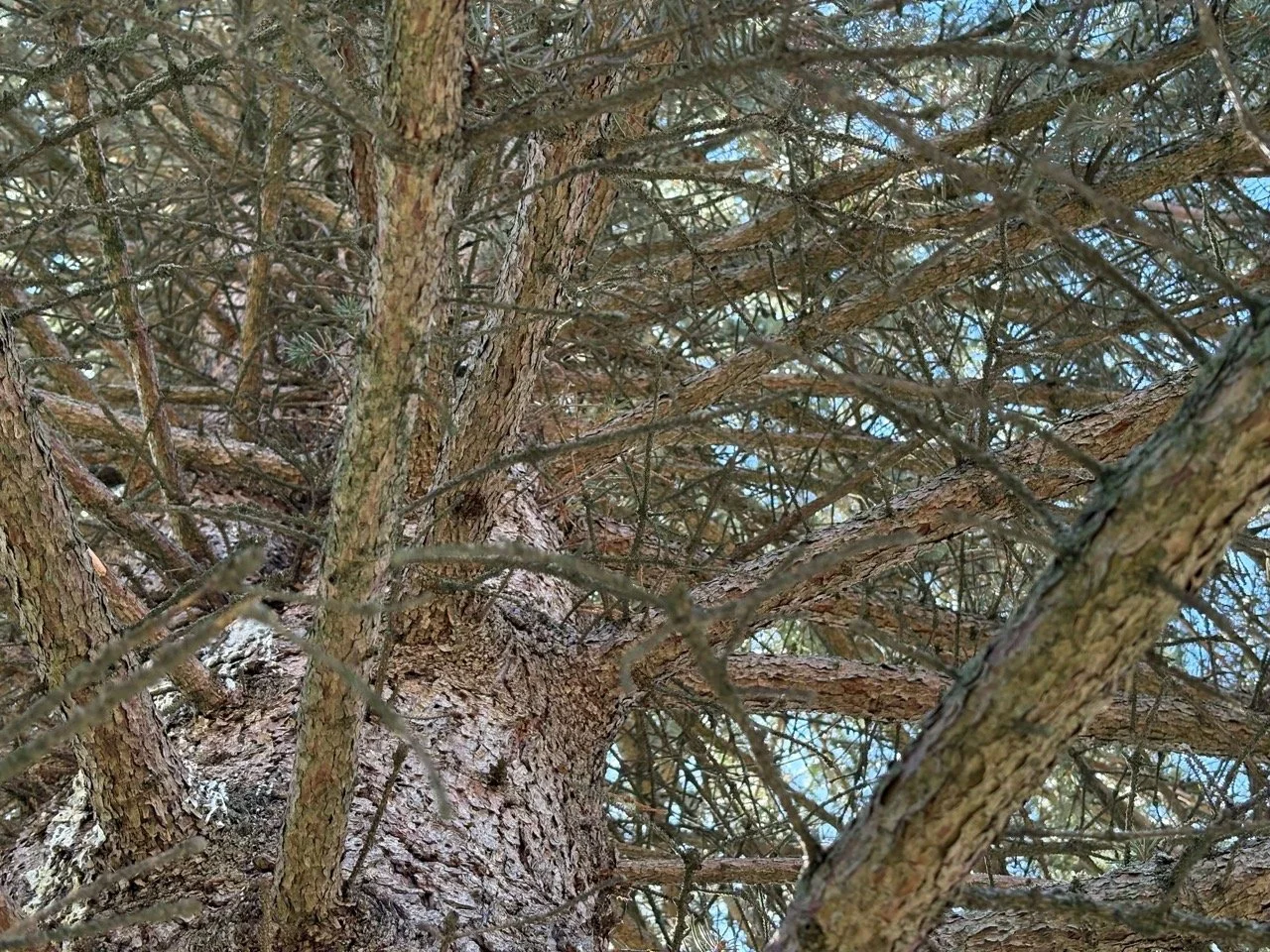
Benefits of Deadwood Removal
Improves safety by removing branches that could fall unexpectedly
Reduces disease and pest issues by eliminating decaying wood
Enhances appearance by cleaning up unsightly, brittle branches
Supports overall tree health by allowing the tree to focus energy on healthy growth
Prevents property damage near homes, driveways, and walkways
How Do I Know If My Tree Needs Deadwood Removal?
Your tree may need deadwood removal if you notice brittle branches, limbs without leaves during the growing season, or branches that easily break off in the wind. Deadwood is often more noticeable after storms, drought, or periods of stress, and it can pose a safety risk if located over walkways, driveways, or near your home.
If you’re unsure, a professional assessment can help determine which branches should be removed without harming the tree. Regular inspections and routine maintenance are the best way to keep your trees healthy, safe, and looking their best.